We are first and foremost a college that educates students.
If asked, “What is the mission of Saint Michael’s College?” President Richard Plumb quickly responds in one word: “Education!” That conviction is not a retreat from the College’s Catholic identity, however. It is essential to it.
 A Catholic college must first be a genuine college. It must take scholarship seriously, protect rigorous inquiry, cultivate disciplinary competence, defend academic freedom, practice intellectual honesty, and sustain a patient search for truth. Catholic identity cannot compensate for weak teaching, superficial scholarship, or resistance to difficult questions. Nor does a college fulfill its Catholic mission by providing religious answers in place of disciplined inquiry.
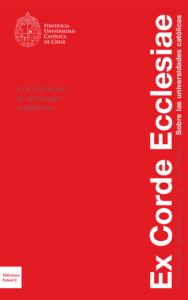
The Church’s own teaching is clear on this point. Ex Corde Ecclesiae states:
The basic mission of a university is a continuous quest for truth through its research, and the preservation and communication of knowledge for the good of society. A Catholic University participates in this mission with its own specific characteristics and purposes (30).
A Catholic university participates in this common academic mission while bringing to it its own distinctive convictions and purposes.
Catholic education, therefore, must remain genuine education. The Second Vatican Council’s Declaration on Christian Education, Gravissimum Educationis, teaches that Catholic schools must “pursue cultural goals and the human formation of youth.” In Catholic colleges and universities, the academic disciplines are to be studied with “liberty of scientific inquiry” (10), and these institutions are to be distinguished by their “pursuit of knowledge” (8). The Congregation for Catholic Education later clarified the distinction in its 1988 document, The Religious Dimension of Education in a Catholic School: Guidelines for Reflection  and Renewal. It explains that religious instruction and catechesis are closely related but remain “distinct and complementary” (70). Catechesis seeks the spiritual, liturgical, sacramental, and apostolic maturity of believers, while “the aim of the school, however, is knowledge” within the broader purpose of students’ “integral formation” (69-70). Catholic higher education must therefore neither exclude faith from intellectual life nor substitute catechesis for academic inquiry. It fulfills its Catholic mission by pursuing knowledge rigorously while bringing faith, culture, and the disciplines into serious and mutually enriching dialogue.
This distinction is particularly important at Saint Michael’s College, where students, faculty, and staff represent many religious traditions and worldviews. Some are Catholic. Some belong to other Christian communities or religious traditions. Others are agnostic, atheist, uncertain, or still searching. Genuine education respects this pluralism and every person’s freedom of conscience.
Students should not be graded on whether they believe Catholic teaching. They should be expected to understand ideas accurately, evaluate evidence, construct arguments, recognize complexity, and engage perspectives different from their own. A Catholic college proposes an intellectual tradition for serious study and dialogue. It does not coerce assent.
This does not mean that Catholic faith is absent from the classroom. It means that faith enters the university through the methods appropriate to a university: inquiry, interpretation, evidence, argument, dialogue, criticism, and reflection.
 In The Idea of a University, John Henry Cardinal Newman understood the university as a community in which the disciplines encounter and complete one another. Theology belongs within that community because questions about God, meaning, moral responsibility, and human destiny are part of the whole field of truth. Excluding theology does not make a university neutral. It leaves important dimensions of reality unexamined and allows other disciplines to make claims beyond the limits of their own methods.
Theology does not replace science, history, literature, philosophy, economics, or the arts. It does not dictate their conclusions. Rather, it enters into dialogue with them. It asks how their discoveries contribute to a fuller understanding of the human person and the world. In turn, theology is challenged and enriched by what the other disciplines discover.
This is also the vision of Ex Corde Ecclesiae. Each discipline investigates reality using its own proper methods, while the disciplines are brought into dialogue for their mutual enrichment. Theology plays a distinctive role in the integration of knowledge and in the dialogue between faith and reason.
A Catholic university therefore holds together two commitments: It must be fully Catholic, and it must be fully a university. Weakness in either dimension damages the whole. A university that is Catholic in name but intellectually timid is not fulfilling its mission. If difficult questions cannot be asked, evidence cannot challenge assumptions, or disagreement is treated as disloyalty, the institution has weakened both its academic character and its Catholic confidence in reason.
At the same time, a university that is academically accomplished but whose Catholic faith no longer affects its intellectual life has become Catholic largely by inheritance. Its chapel, symbols, history, and sponsoring tradition may remain, but they risk becoming historical decorations rather than sources of intellectual direction.
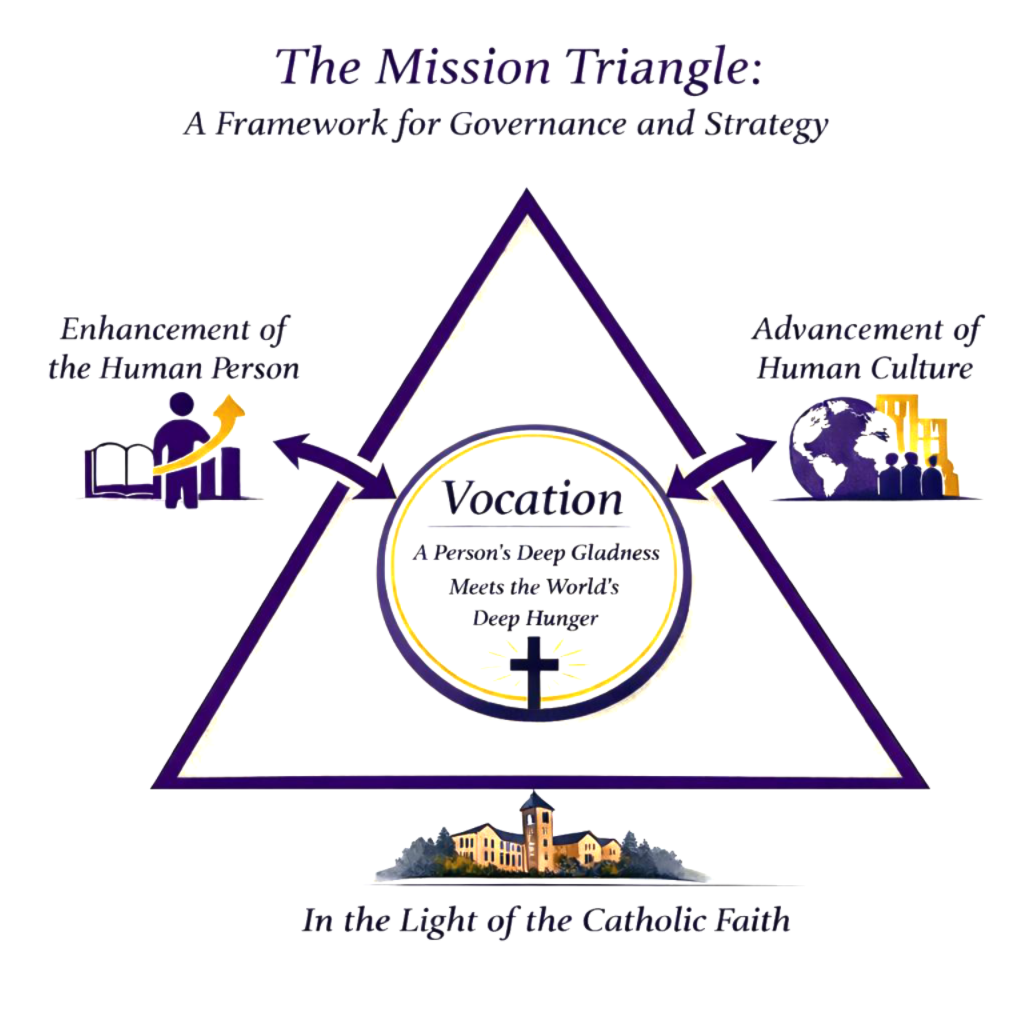
Saint Michael’s College seeks “to contribute through higher education to the enhancement of the human person and the advancement of human culture in light of the Catholic faith.” The phrase “through higher education” is crucial. Saint Michael’s fulfills its Catholic mission not by becoming less academic, but by becoming more deeply committed to education: to disciplined inquiry, intellectual courage, dialogue among the disciplines, and the search for truth.
The Catholic faith does not replace that search. It gives confidence that the search is worthwhile, that truth can be known, and that knowledge should ultimately serve the human person and the common good.
If you would like to make a comment or ask a question, I can be reached at dtheroux@smcvt.edu. Let’s talk!

For all press inquiries contact Elizabeth Murray, Associate Director of Communications at Saint Michael's College.
Related News See more news