The search for an integration of knowledge
To say that Saint Michael’s College carries out its mission “in light of the Catholic faith” does not mean that every course should begin with a religious statement or arrive at a specifically Catholic conclusion. It does not mean that biology, economics, history, literature, psychology, or political science must abandon their proper methods and become branches of theology.
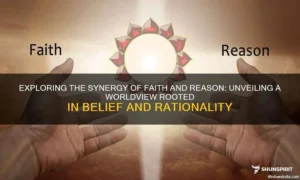
The Catholic intellectual tradition begins with confidence that truth is real and worth seeking, that human reason can know something of reality, and that faith and reason are ultimately compatible.
Rather, Catholic faith provides an intellectual horizon within which the work of higher education takes place.
An intellectual horizon does not determine every answer in advance. It identifies the larger convictions and questions that shape the search for understanding. The Catholic intellectual tradition begins with confidence that truth is real and worth seeking, that human reason can know something of reality, and that faith and reason are ultimately compatible. It holds that creation is intelligible and meaningful, that every human being possesses an inherent dignity, and that knowledge carries moral responsibility.
These convictions matter because education is never simply the accumulation of neutral information. Every discipline operates with assumptions about what is real, what can be known, what constitutes reliable evidence, and what purposes knowledge should serve. Even the decision to avoid questions of meaning or morality reflects a particular intellectual position.
The Catholic tradition invites us to bring those assumptions into the open.
In Ex Corde Ecclesiae, Saint John Paul II identifies four dimensions that should characterize intellectual life in a Catholic university: “the search for an integration of knowledge,” “a dialogue between faith and reason,” “an ethical concern,” and “a theological perspective” (15). These are not four additional courses to be placed somewhere in the curriculum. They describe the intellectual culture that should animate the institution as a whole.
The integration of knowledge challenges the fragmentation of the modern university. Academic specialization is necessary, but no single discipline possesses the whole of truth. Scientific discovery, historical understanding, philosophical reflection, artistic expression, social analysis, and theological inquiry need one another. In The Idea of a University, Saint John Henry  Newman argued that “all Knowledge is a whole, and the separate Sciences parts of one” (Discourse V, “Knowledge Its Own End,” §1). Theology belongs within this whole because the study of God concerns a genuine dimension of reality. Its exclusion would leave the university’s pursuit of universal knowledge incomplete.
Theology does not replace the other disciplines or dictate conclusions that properly belong to their methods. Rather, it helps draw them into conversation, asks how their partial insights relate to a larger understanding of reality, and keeps before them questions of ultimate meaning, purpose, and human destiny. At the same time, theology is itself questioned and enriched by what the other disciplines discover. A Catholic college should therefore create opportunities for disciplines to meet, question, correct, and enrich one another.
The dialogue between faith and reason requires intellectual openness from both. Faith must be willing to encounter evidence, argument, criticism, and new knowledge. Reason must remain open to questions that cannot be settled through measurement or technical analysis alone: questions of meaning, purpose, dignity, suffering, hope, obligation, and transcendence.
Ethical concern asks what knowledge makes possible and what responsibilities follow from it. The fact that something can be developed, marketed, taught, or implemented does not by itself establish that it should be. Knowledge gives power, and power can serve, exclude, liberate, exploit, heal, or harm.
A theological perspective places human inquiry within the largest possible horizon. It asks what our knowledge reveals about creation, the human person, our obligations to one another, and humanity’s relationship with God. Theology does not control the other disciplines. It keeps open questions of ultimate meaning that specialization may otherwise leave unasked.
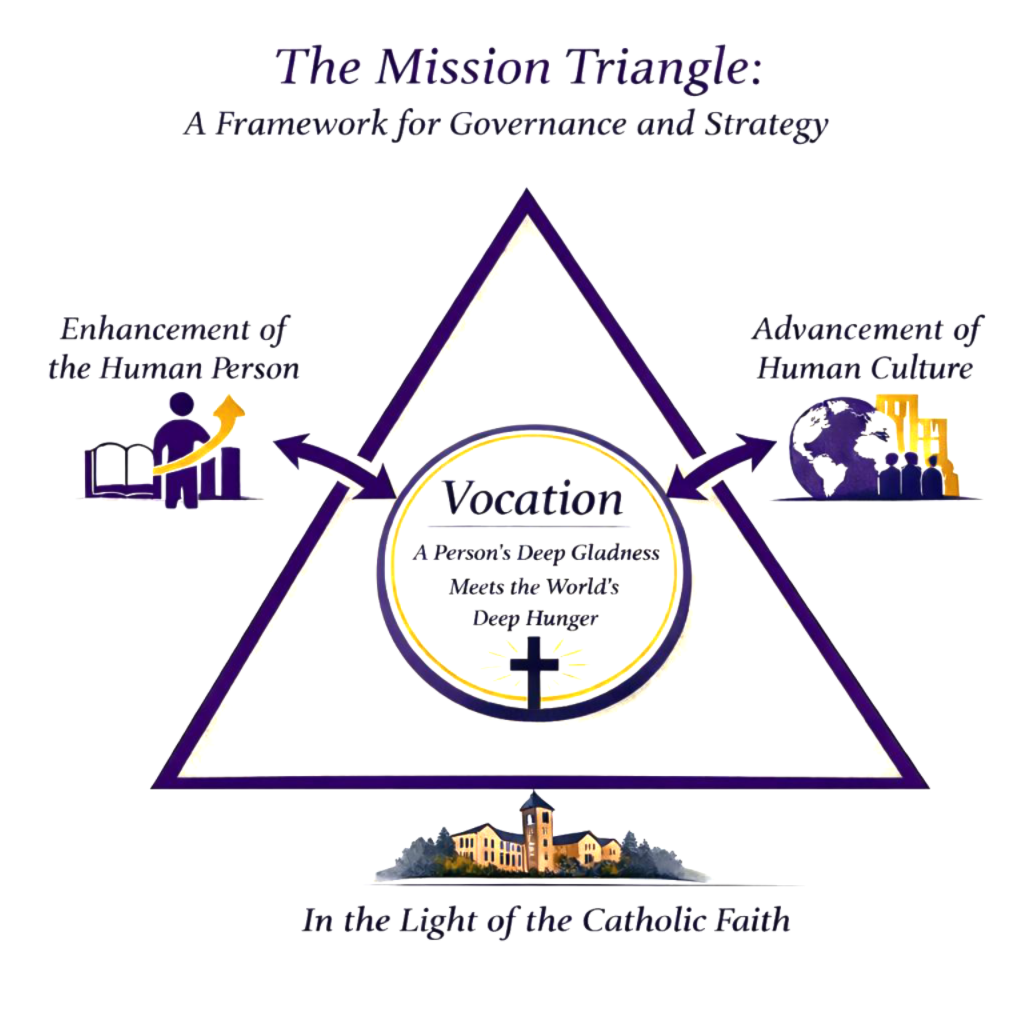
At Saint Michael’s, these commitments should shape how we understand our mission “to contribute through higher education to the enhancement of the human person and the advancement of human culture in light of the Catholic faith.” The mission does not ask us merely to produce educated individuals who can compete successfully in the economy. It asks whether education contributes to human flourishing and whether the culture our graduates help create is more truthful, just, humane, and attentive to the common good.

A Catholic college should respect conscience, welcome disagreement, and learn from other religious and secular traditions.
This intellectual horizon is fully compatible with the pluralism of our community. Students, faculty, and staff need not share Catholic belief to participate in the conversation. A Catholic college should respect conscience, welcome disagreement, and learn from other religious and secular traditions. But authentic dialogue requires the institution to speak clearly from its own tradition rather than retreating into religious vagueness.
For faculty, administrators, and trustees, the challenge is therefore not to insert Catholic language artificially into academic or institutional life. It is to ensure that the larger questions remain alive:
- What is this knowledge for?
- What understanding of the human person does it assume?
- Who benefits from its application?
- Who may be harmed or excluded?
- What obligations arise from it?
- How does it contribute to human flourishing, justice, and the common good?
The Catholic faith provides Saint Michael’s not with predetermined answers to every question, but with confidence that the questions matter, that truth is worth seeking, and that education should ultimately serve more than private advancement. It should enhance the human person and advance human culture.
If you would like to make a comment or ask a question, I can be reached at dtheroux@smcvt.edu. Let’s talk!

For all press inquiries contact Elizabeth Murray, Associate Director of Communications at Saint Michael's College.
Related News See more news