First Things First: Treating Students as Persons, Not Merely Future Workers

Students have inherent dignity and worth.

Students are more than future workers and consumers. More importantly, they are persons with inherent dignity and worth.
Students rightly come to Saint Michael’s College hoping that their education will prepare them for meaningful work, economic independence, and a secure future. Families expect a college degree to open professional opportunities. Employers need graduates who possess knowledge, judgment, adaptability, and practical competence.
Catholic higher education takes these expectations seriously. It does not regard professional preparation as unworthy or secondary. Work is one of the principal ways people develop their abilities, support themselves and others, contribute to society, and participate in the ongoing creation of the world.
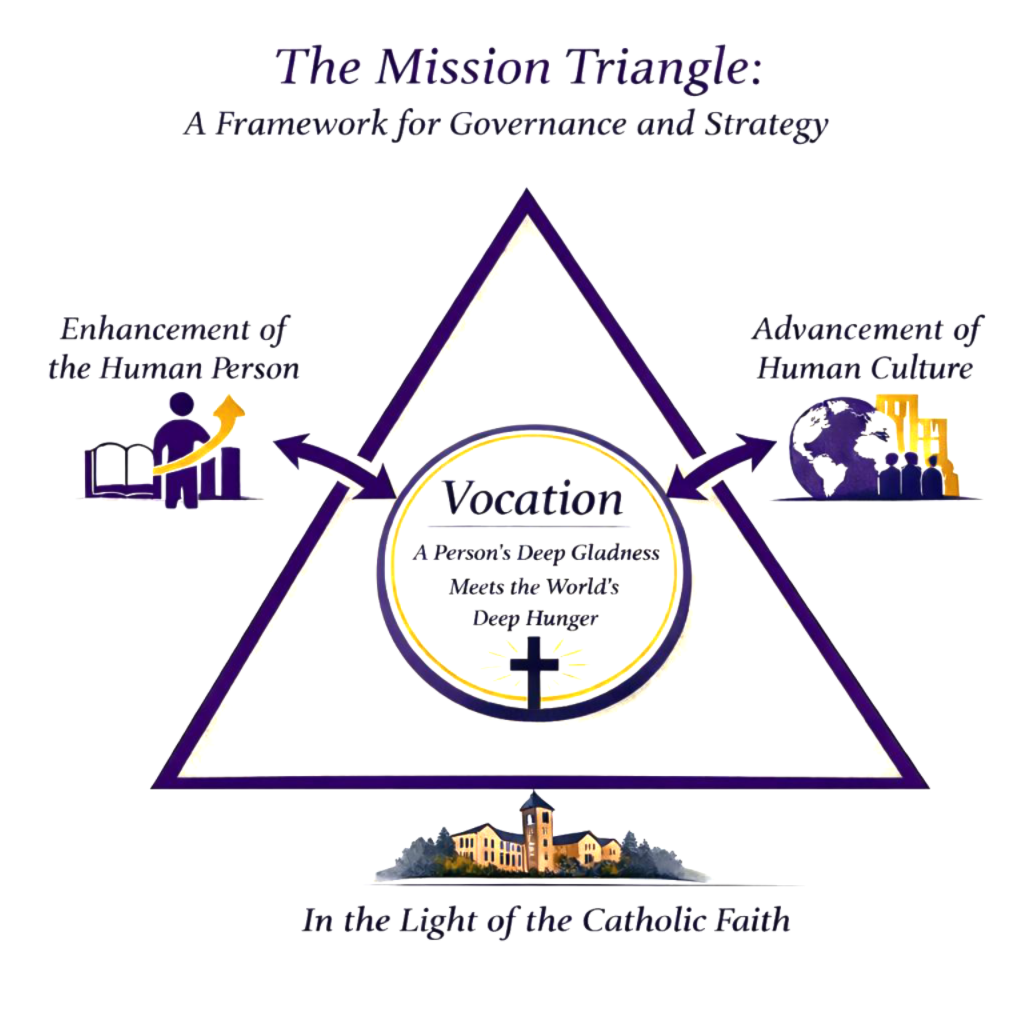
Yet Catholic higher education insists that students are more than future workers. A college cannot measure its success only through graduation rates, starting salaries, job placement, or return on financial investment. Valuable as these measures may be, they do not capture the full purpose of education. Saint Michael’s mission is not merely to increase the economic value of its graduates. It is “to contribute through higher education to the enhancement of the human person and the advancement of human culture in light of the Catholic faith.”
The phrase “enhancement of the human person” expresses a fundamental Catholic conviction: each person possesses a dignity that is received, not earned. Human worth does not depend upon intelligence, productivity, professional status, wealth, social usefulness, or the possession of particular skills. The person is never simply a consumer, employee, voter, demographic category, or collection of preferences.

Claude McKay, a Black American Catholic poet, gives poetic force to the conviction that human dignity does not depend upon how society values or treats a person. It remains even when that dignity is denied, violated, or placed under threat.
The Second Vatican Council declares that true education seeks “the formation of the human person” in relation both to the person’s ultimate purpose and to “the good of the societies” in which each person participates (Pope Paul VI, Gravissimum educationis, 1965, 1). Education should help students develop their intellectual and moral capacities, grow in responsibility, exercise freedom wisely, form sound judgments, and contribute to social life.
This is what the Catholic tradition means by “integral formation” (The Religious Dimension of Education in a Catholic School: Guidelines for Reflection and Renewal, 69). The student is an intellectual being, but not only an intellect. Each student is also embodied, relational, emotional, moral, social, and spiritual. Each has a history, a network of relationships, a developing sense of identity, and a vocation that cannot be reduced to a job title.
Pope Leo XIV, in his 2025 apostolic letter Drawing New Maps of Hope, warns against reducing education to functional training or an economic instrument. A person, he writes, is not a “skills profile” and “cannot be reduced to a predictable algorithm, but is a face, a story, a vocation” (Drawing New Maps of Hope, 4.1–4.2). Christian formation embraces the spiritual, intellectual, emotional, social, and physical dimensions of the person. Its value is measured not only by efficiency, but also by dignity, justice, and the capacity to serve the common good.

Professional competence alone cannot determine whether that knowledge will heal or harm.
Catholic higher education therefore asks more than “What can our graduates do?” It must also ask: “What kind of persons are they becoming, and what will they do with what they know?”
A student may become a highly skilled scientist, teacher, accountant, journalist, nurse, psychologist, entrepreneur, or public servant. But professional competence alone cannot determine whether that knowledge will heal or harm, liberate or exploit, include or exclude. Competence must be joined to conscience. Knowledge must be joined to wisdom. Freedom must be joined to responsibility. Achievement must be joined to service.
This understanding should affect the entire institution.
- For faculty, it means seeing teaching as more than the delivery of disciplinary content. It includes helping students develop intellectual honesty, moral imagination, empathy, sound judgment, and an awareness of the consequences of knowledge.
- For administrators, it means refusing to treat students merely as customers or employees, merely as units of productivity. Policies, advising, student support, employment practices, and resource allocation should reflect the dignity of the persons affected by them.
- For trustees, it means evaluating institutional success through more than enrollment, revenue, rankings, and career outcomes. Those matters are necessary, but they remain means rather than ends. Governance must ask whether the College is actually enhancing persons, advancing human culture, protecting the vulnerable, and serving the common good.
A Catholic college should prepare students to make a living. It must also help them discern what makes a life worth living. The goal is not merely that graduates become employable, but that they become thoughtful, responsible, compassionate, and courageous people who can place their abilities at the service of others. That is not an alternative to excellent professional preparation. It is what gives professional preparation its human purpose.
If you would like to make a comment or ask a question, I can be reached at dtheroux@smcvt.edu. Let’s talk!

For all press inquiries contact Elizabeth Murray, Associate Director of Communications at Saint Michael's College.
Related News See more news