Our graduate assistants returned to the Natural Area with the Middle Grades Institute for another outdoor education workshop. This time, we integrated art, sustainability, and teaching, in order to design a unique activity making “Insect Hotels”.
Activities like this one showcase how teaching in the Outdoor/Living Classrooms can create many opportunities to educate for sustainability. This approach highlights how the project-based and experiential learning theory frameworks allows for integration of holistic teaching methods -from student engagement to wellness to students’ self-esteem. In this process, students demonstrate their interests and strong academics to engage in other subjects they haven’t explored thoroughly and produce something in the end that serves their host community.
If you’ve ever wandered around our on-campus gardens, you may have noticed hexagons on posts, filled with reeds. These are known as insect hotels and are created by art and design professor, Brian Collier’s classes. The reeds in the center are invasive phragmites, a plant that is found abundantly in our natural area. In an effort to use resources provided naturally that are also invasive, the phragmites are harvested and cut for the project. Insect hotels have many different benefits for a garden. They provide a home for native beneficial insects, such as ladybugs and lacewings, which also act as a natural pesticide because they eat harmful bugs! Additionally, they are great homes for native pollinators, supporting a healthier, happier, and more biodiverse garden.
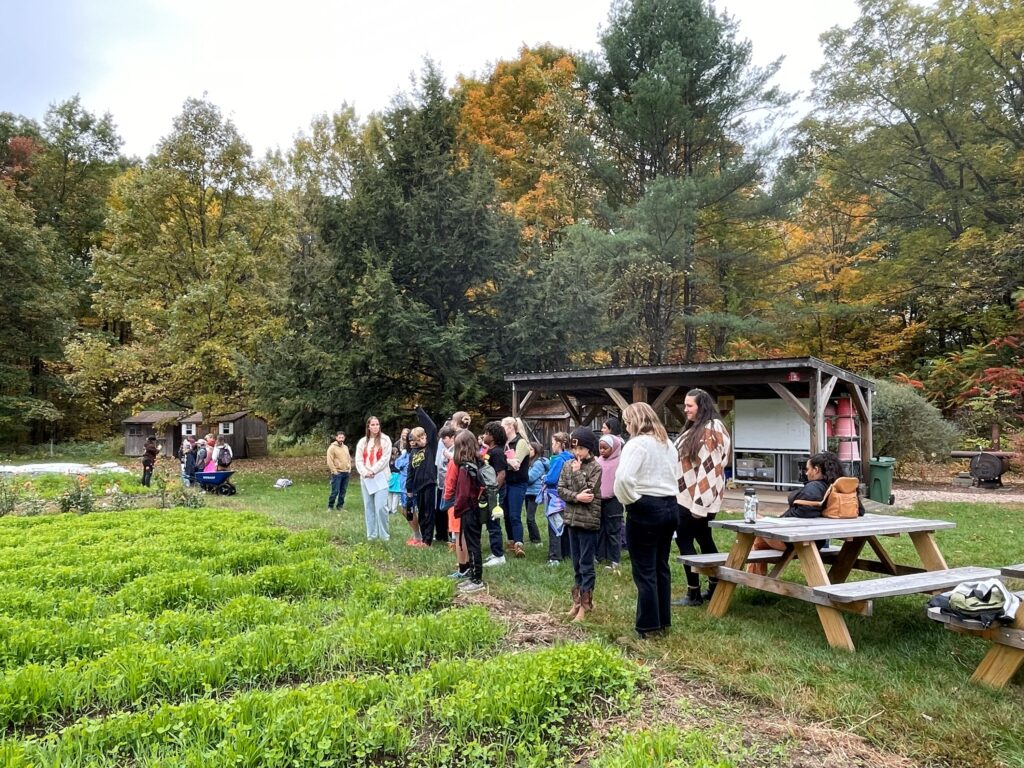
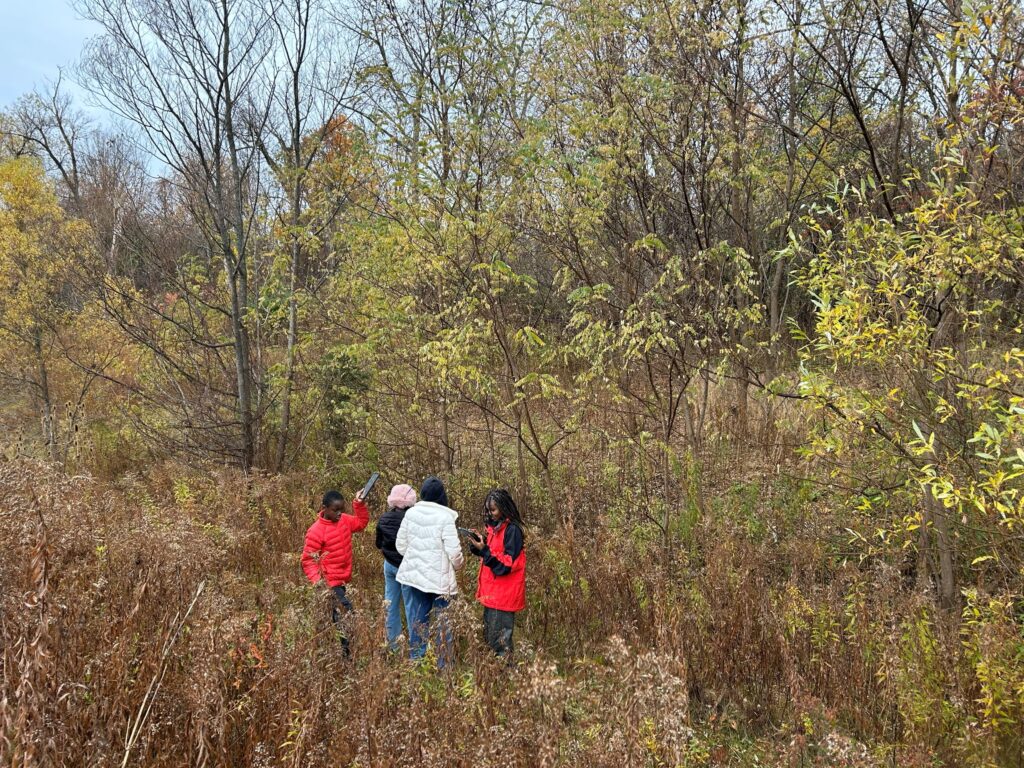
So, we headed back across Route 15 to the teaching pavilion with MGI to give our version of insect hotels a try! After some quick background on phragmites and an introduction to insect hotels, the teachers trekked into the surrounding fields to harvest their own phragmites. We found a patch just off the pavilion and did our cuttings, a small effort against the spread of the invasive. For our version of the hotels, we used recycled materials like soup and soda cans. Then we cut our phragmites to the right length and filled the containers with the reeds. Some examples by the grad assistants had even been painted to look like bees or ladybugs. The teachers had great ideas of how to integrate this project into their curriculum, identifying the phragmites in their own educational spaces and connecting it to educating their students on biodiversity in their community. They also were inspired to collaborate with ideas such as collecting recycled materials and working with other members of their school team like art teachers and the garden club! They loved the use of meaningful materials and found the reed cutting almost meditative. When we finished, we tied twine to the top, making it all ready to pop into a garden. All in all, everyone had fun chatting and creating their hotels, while also brainstorming about the activity’s many benefits for students. The teaching pavilion also provided a great escape to be outdoors on an otherwise drizzly day!
Edits & Contributions from the Leahy Graduate Assistant Team

For all press inquiries contact Elizabeth Murray, Associate Director of Communications at Saint Michael's College.
Related News See more news