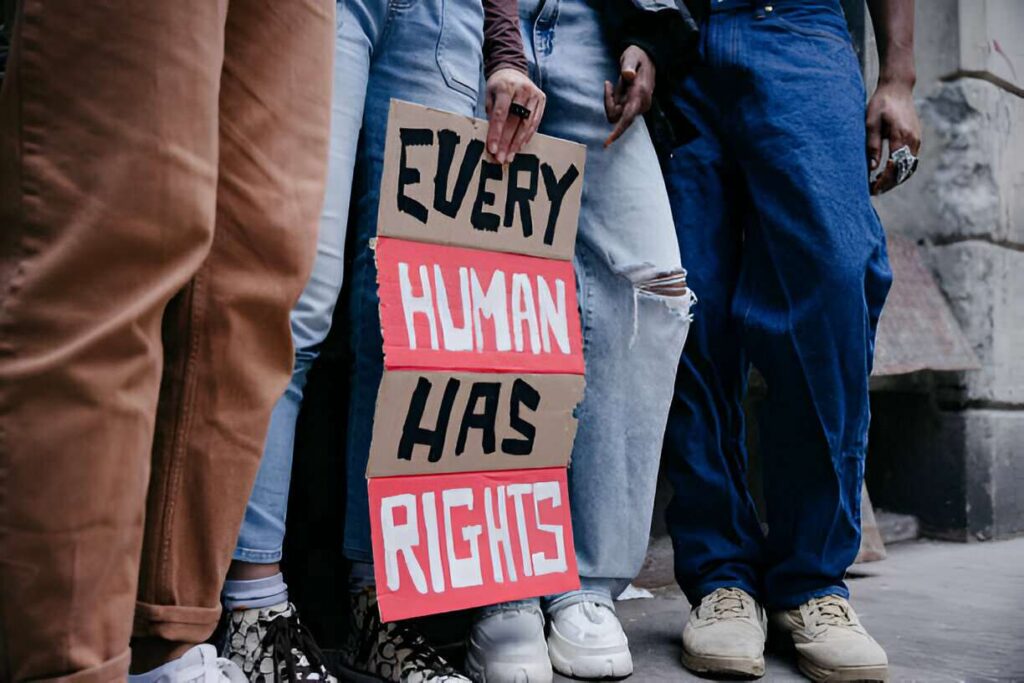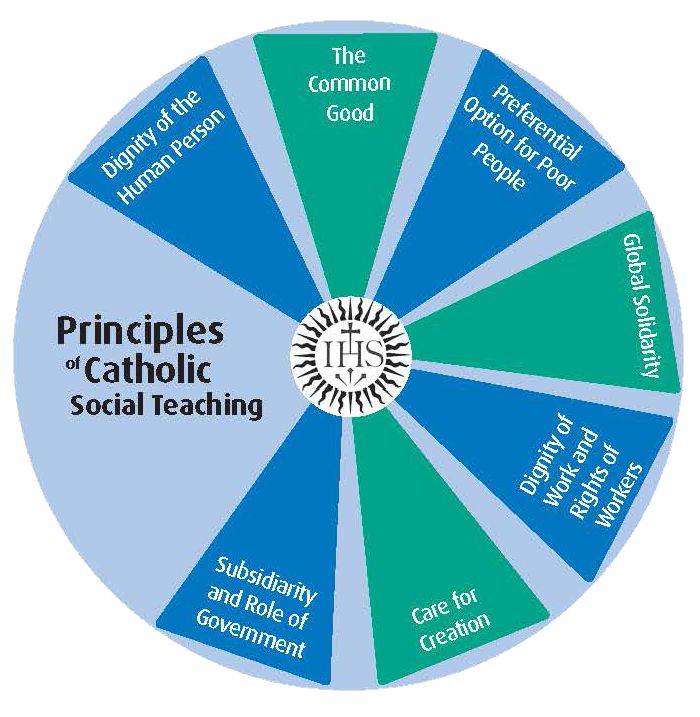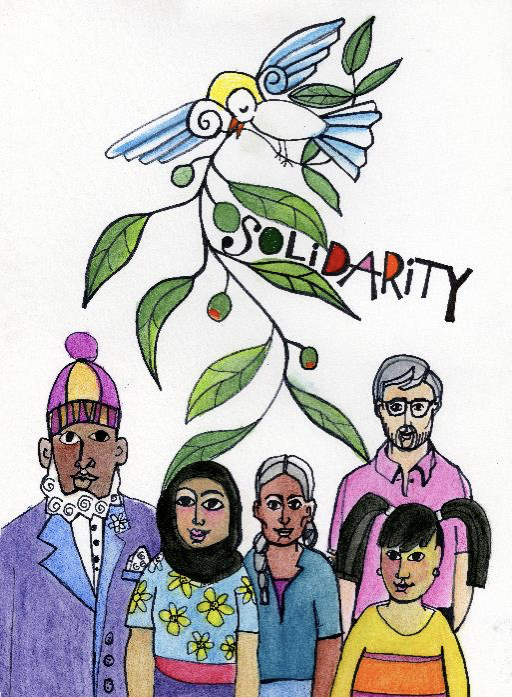
The sixth principle of Catholic social teaching is solidarity, the call to stand with others in their efforts to achieve justice. More than empathy and more than charity, solidarity is a moral and spiritual commitment to walk with those who suffer, to act on their behalf, and to share in the burdens and struggles of the global human family. In the words of Pope John Paul II, it is “a firm and persevering determination to commit oneself to the common good… because we are all really responsible for all” (Sollicitudo rei Socialis [On Social Concern], 1987, 38).
 Solidarity recognizes that we are bound together by a shared humanity, regardless of national borders, economic class, or racial identity. We are not isolated individuals but rather one human family. This principle, central to Catholic social teaching, insists that we are our brothers’ and sisters’ keepers, wherever they may live (cf. Genesis 4). As the U.S. bishops have said, “our love for all our sisters and brothers demands that we promote peace in a world surrounded by violence and conflict” (United States Conference of Catholic Bishops, Seven Themes of Catholic Social Teaching).
Scripture grounds this call in the very story of salvation. God’s covenant with Israel was not exclusive but expansive: “in you all the families of the earth shall be blessed” (Genesis 12:3). The psalms envision peace as the fruit of justice and right relationships (Psalms 72, 122). The prophet Zechariah exhorts the people: “Speak the truth, judge well, make peace” (Zechariah 8:16). In the Sermon on the Mount, Jesus names the peacemakers “children of God” (Matthew 5:9) and calls for reconciliation as a precondition for worship (Matthew 5:21–24). Paul writes that “love does no wrong to a neighbor” and fulfills the law (Romans 13:10), while 1 Corinthians 12:26 offers a powerful image of solidarity in the body of Christ: “If one member suffers, all suffer together.”
Solidarity takes on concrete form in our actions and systems. It means challenging structures of inequality and advocating for those denied access to basic rights and dignity. Pope Francis, in Fratelli Tutti, “On Fraternity and Social Friendship,” (2020) laments the decline of solidarity in a world of “cool, comfortable, and globalized indifference” (30) and affirms that solidarity “means thinking and acting in terms of community… combatting the structural causes of poverty, inequality, the lack of work, land and housing, the denial of social and labor rights” (116).
This vision is not limited to individual action. As Pope Benedict XVI explains, to desire the common good “is a requirement of justice and charity” (Caritas in Veritate [Charity in Truth], 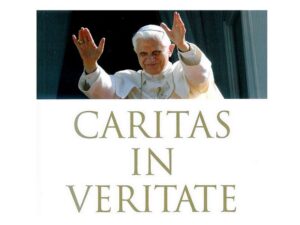 2009, 7). Our economic, political, and social choices must reflect that commitment. Even our daily habits, such as what we purchase and whom we support, have moral implications. “Purchasing is always a moral—and not simply economic—act,” Pope Benedict writes, and consumers have “a specific social responsibility” (66).
In this light, contemporary principles like diversity, equity, and inclusion (DEI) can serve as important expressions of solidarity, insofar as they honor human dignity, promote fair access, and strive to include those often excluded. But Catholic teaching insists that solidarity goes deeper. It is not only about representation or fairness; it is about standing with others in their quest for justice and acting together to transform unjust systems.
The Catholic principle of solidarity finds meaningful alignment with contemporary commitments to DEI. While DEI emphasizes the recognition of human difference, fair access to resources, and the intentional inclusion of all people, especially those historically marginalized, solidarity deepens and grounds these goals in a theological vision of the human family. It challenges us not only to welcome difference but to walk alongside those who suffer injustice, advocating for structural change and communal flourishing. In this sense, DEI values become expressions of solidarity when they move beyond policy and representation to embody a shared commitment to the dignity, rights, and well-being of every person.
 This principle challenges every level of society. Nations cannot ignore the suffering of others; the wealthy cannot overlook the poor. As Pope John XXIII observed, “it will not be possible to preserve a lasting peace so long as glaring economic and social imbalances persist” (Mater et Magistra [On Christianity and Social Progress], 1961, 157). The call to solidarity is a call to reshape the world through love that is active, courageous, and rooted in faith.
To live in solidarity is to answer God’s question to Cain, “Where is your brother?” with the conviction, “I am my brother’s and sister’s keeper.” In a world wounded by division, solidarity is the Gospel’s invitation to build peace through justice, and to recognize in every person a brother, a sister, and a companion on the journey.
If you would like to make a comment or ask a question, you can contact me at dtheroux@smcvt.edu. Let’s talk!

For all press inquiries contact Elizabeth Murray, Associate Director of Communications at Saint Michael's College.
Related News See more news