Saint Michael’s College is preparing students to save the world – quite literally. The College is rolling out a comprehensive Emergency Services program, led by a new major.
Students will learn the knowledge and skills required to serve as EMS providers, firefighters, wilderness first responders and emergency management personnel.
After a successful launch of an Emergency Medical Services (EMS) minor in fall 2025, the College received another quarter-million-dollar donation to build out a program that incorporates a Bachelor of Science degree, nationally recognized certifications, and real-world application across a variety of disciplines. St. Mike’s is excited to offer the full scope of the Emergency Services program, starting Fall 2026.
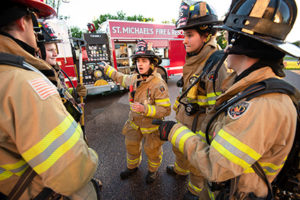
Saint Michael’s Fire and Rescue is a valued student-staffed agency to serve the community.
Responding to calls as a calling
Leading the program’s creation is Kate Soons ’94, Director of Health Science and Emergency Services Programs at St. Mike’s. For her, this program is personal.
At 19 years old in 1989, she joined Saint Michael’s Fire & Rescue. She described a formative experience responding to a minivan crash on the interstate involving adults and children in a recently published column.
“Over the next 30 minutes, I worked alongside other police, fire, and EMS professionals who responded to the scene from around the county to treat and transport the injured to the hospital,” Soons wrote. “I relied on both my EMT training and my St. Mike’s educational experience to do my part – communicating clearly, problem-solving, and ensuring that everyone involved received the care they needed.”
After letting the magnitude of what she had just done sink in, that experience “helped solidify my passion for helping others and shaped my path during and after college,” she said.
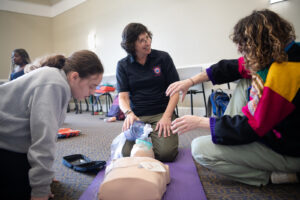
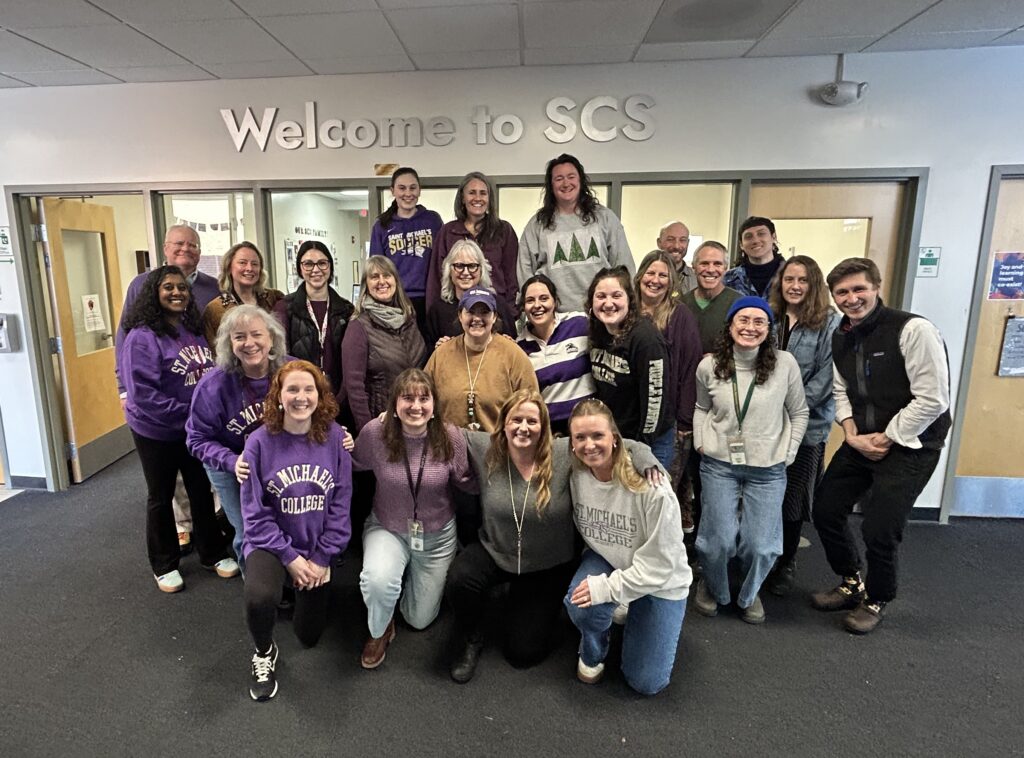
Kate Soons ’94 (middle) is the Director of the Emergency Services program at Saint Michael’s College.
Saint Michael’s College students have served the community as volunteer first responders since 1969, when the Fire & Rescue program first began. The student-led program responds to more than 3,500 emergency calls each year – both on campus and in the community – making this an exceptionally unique experience.
The development of the Emergency Services degree integrates the unique student volunteer experience with a formal program of study. All aspects of the curriculum honor the core values of the Society of St. Edmund, the Catholic order of priests who founded the college. “Service to others, access to education, and inclusion of all people are reflected clearly in the mission of Fire & Rescue to this day,” Soons said.
This melding of purpose, real-world experience and specialized training, combined with a liberal arts education focused on multidisciplinary studies and communication skills, creates well-rounded and capable emergency responders.
“Students acquire professional skills essential for future careers, including active listening, collaboration, and cross-cultural awareness and communication,” Soons said. “These are critical skills in emergency response situations when time is of the essence. Our future healthcare workers learn to prioritize humanity and empathy while still delivering effective care.”
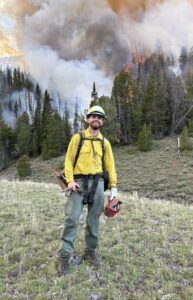
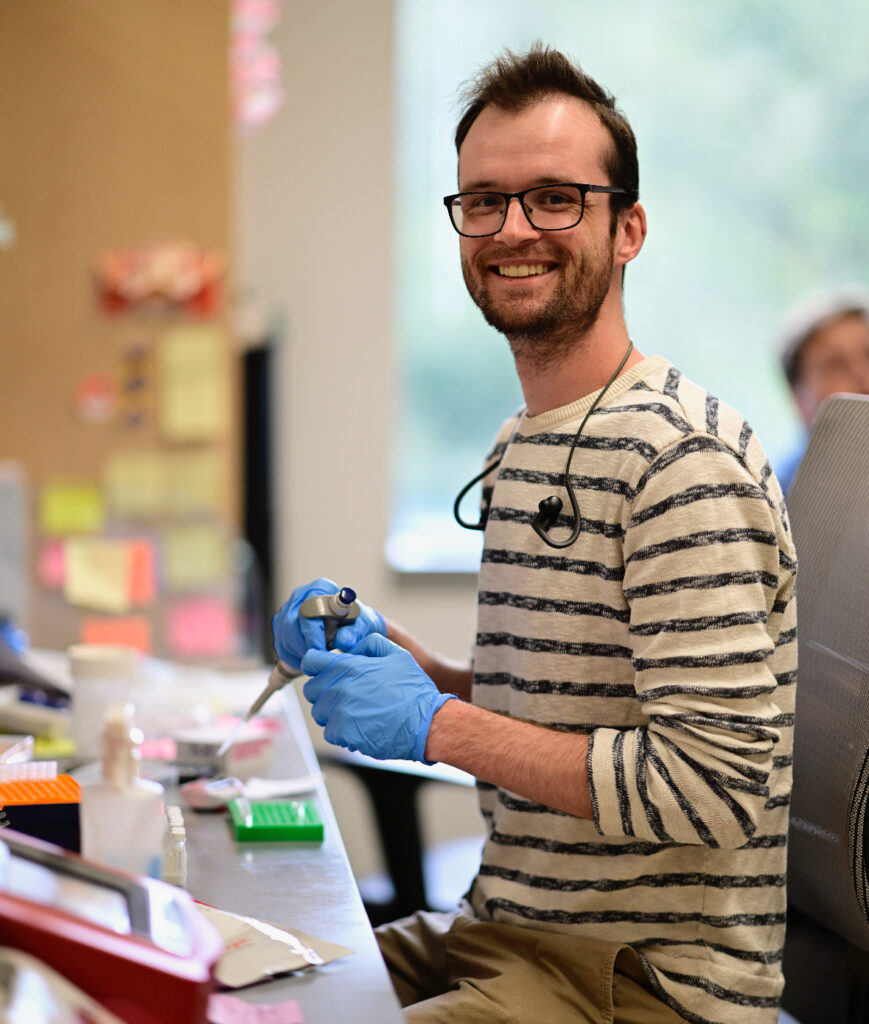
Ben Mogensen ’24 of the U.S. Forest Service in front of Wino Basin prescribed burn in Custer County, Idaho on June 9, 2025.
St. Mike’s program addresses critical workforce needs
First responders are vital to the greater healthcare system, which became even more apparent during the pandemic. But, there are critical workforce shortages.
A study by Mercer from 2024 suggests the U.S. will be short at least 100,000 healthcare workers by 2028 if trends continue. Here in Vermont, emergency call volume had increased by 102 percent between 2015 and 2023, according to a Seven Days article, even while workers decreased by 30 percent.
As natural disasters and extreme weather events become increasingly prevalent, so does the need for more workers with specialized training in disaster preparedness and response as well as wilderness medicine.
The Emergency Services program at Saint Michael’s College aims to address these emergent challenges while helping shore up an industry in urgent need of highly trained workers.
Program description
The Bachelor of Science in Emergency Services offers a curriculum grounded in the liberal arts with a foundation in disaster preparedness, response, recovery, and mitigation.
The major has four tracks: Emergency Medical Services, Fire Science, Wilderness Medicine, and Emergency Management. Each offers coursework that leads to entry-level career opportunities.
In addition to the focused tracks, the major requires students to also complete a minor (or double major) to allow for a deeper dive into a discipline related to caring for humans, our culture, and the environment.
Students completing the Bachelor of Science in Emergency Services will learn professional skills and knowledge for public service, as well as the value of appreciating the lived experience of the people they help.
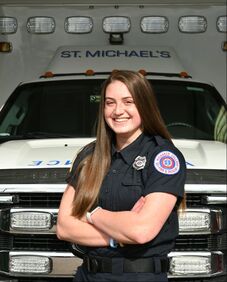
Katie Escobedo ’23 on duty at Saint Michael’s Fire & Rescue.
In addition, students obtain professional certifications through the embedded curriculum. They can become certified as an Emergency Medical Technician (EMT), Advanced EMT, Firefighter I, Firefighter II, EMS Instructor Coordinator, Wilderness EMT, Wilderness First Responder, or attain a FEMA-aligned Emergency Management Certificate.
As a regional partner in Vermont emergency services, St. Mike’s offers EMT, Advanced EMT, and Wilderness First Responder certifications to community members, too, meeting the need for high-quality EMS education in Vermont.
Two preeminent student organizations are being utilized for the Emergency Services program. In addition to gaining real-world experience through SMFR, students can also earn academic credit or fulfill certification and clinical course requirements either by participating in or observing SMFR activities. The Adventure Sports Center – which offers outdoor adventure trips throughout the year and trains student guides – offers a Wilderness First Responder certification, which Emergency Services students can take.
The Emergency Services degree is a substantial stepping stone for those planning to acquire advanced education or training for healthcare-specific jobs, such as nursing and physical therapy, or those who intend to go on to medical school.
Where can an Emergency Services degree lead?
An Emergency Services degree is valuable in a variety of sectors – from healthcare and government, to non-profit and private-sector organizations.
Chief among possible careers include becoming a first responder, such as an EMT, Paramedic, Firefighter, or Police Officer. However, a graduate can go to strategic roles in organizational or municipal management as an Emergency Manager and Disaster Coordinator, or in government agencies such as Homeland Security, Public Health, Public Information, and Risk Management. A person may wish to work in disaster recovery for a non-profit coordinating humanitarian aid for crises, either domestically or abroad. They could also become a Park Ranger at a state or national park or fight wildfires in California.
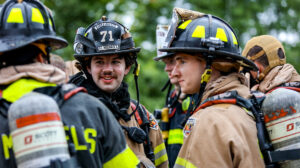
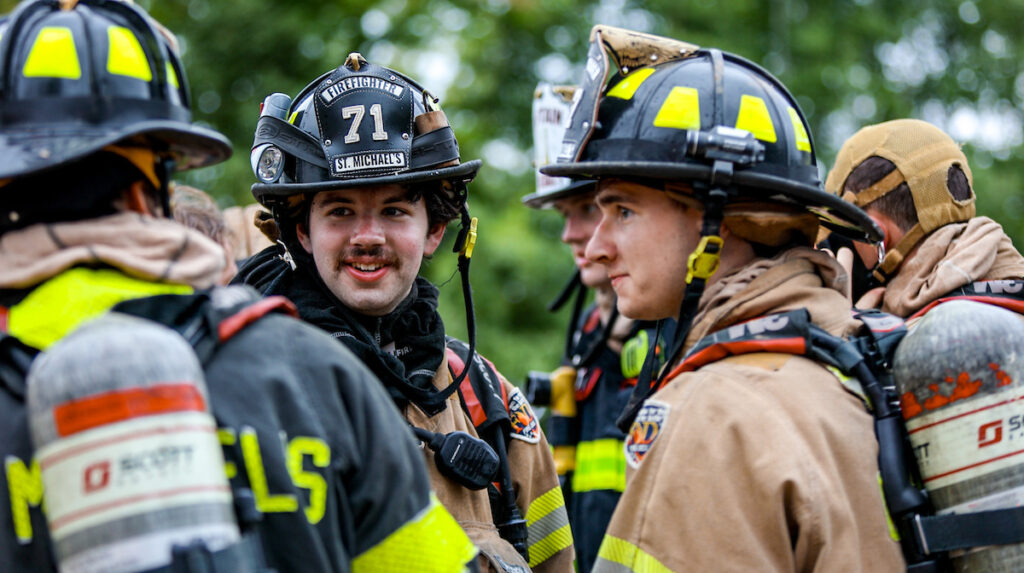
Saint Michael’s College Fire and Rescue students participate in a training in 2025.
The Emergency Services degree is wide-ranging in application. And, some of these highly specialized roles require a college degree for entry or advancement.
“At its core, the Emergency Services program isn’t just about producing more EMTs,” Soons said. “It’s about preparing resilient individuals who respond to emergencies with calm, confidence, and compassion when they’re needed most. And when every second counts, leading with humanity, kindness, and empathy could make all the difference.”
Find out more about the Saint Michael’s College Emergency Services program here.

For all press inquiries contact Elizabeth Murray, Associate Director of Communications at Saint Michael's College.
Related News See more news