 Every day, subtle prompts shape our behavior. A notification urges us to check a message we did not plan to read. An app suggests a video “you may like,” and suddenly an hour is gone. Online shopping carts nudge us toward products with the words “customers also bought.” None of these are neutral suggestions; they are carefully designed mechanisms to guide our choices. The more these nudges determine what we see, buy, or believe, the less room there is for true agency. Freedom begins to slip away, not through force, but through manipulation disguised as convenience.
Human Freedom at the Heart of Catholic Teaching
Catholic teaching places human freedom and responsibility at the core of moral life. The Catechism of the Catholic Church insists that “freedom is the power, rooted in reason and will, to act or not to act… and so to perform deliberate actions on one’s own responsibility” (no. 1731, 430). Human dignity demands that people are not reduced to passive subjects of external control. Similarly, Gaudium et Spes affirms that true freedom is found in the pursuit of truth and goodness, not in manipulation (no. 17). Indeed, human dignity requires persons to act through conscious and free choice.
The danger of AI systems lies precisely in their capacity to compromise this freedom, not by overt coercion but through hidden persuasion.
How Technology Hijacks Minds
Tristan Harris, a former Google design ethicist, described how apps are engineered for compulsion. Features such as infinite scrolling, autoplay, and push notifications exploit psychological vulnerabilities, keeping users hooked (“How Technology Hijacks People’s Minds,” 2016). This design is not accidental; it is profitable. Every additional minute a person spends online is  more data collected, more ads viewed, more revenue generated.
Consider how platforms recommend videos or posts “just for you.” The sense of personalization is appealing, but it also narrows perspective, creating echo chambers. This has political and social consequences. Misinformation spreads more easily when algorithms amplify what users already want to believe. Freedom, then, is compromised not by open censorship but by a carefully curated stream of influence.
Youth and Digital Culture
Pope Francis recognized how deeply these dynamics affect the young and the old alike. In Christus Vivit, he warned that while the digital world can create opportunities for encounter, it also exposes us all to manipulation and addiction: “Digital spaces blind us to the vulnerability of another human being and prevent us from our own self-reflection” (no. 90). Scrolling late into the night or being pulled into viral outrage is not simply a bad habit. It erodes our capacity for authentic human relationship and reflective choice.
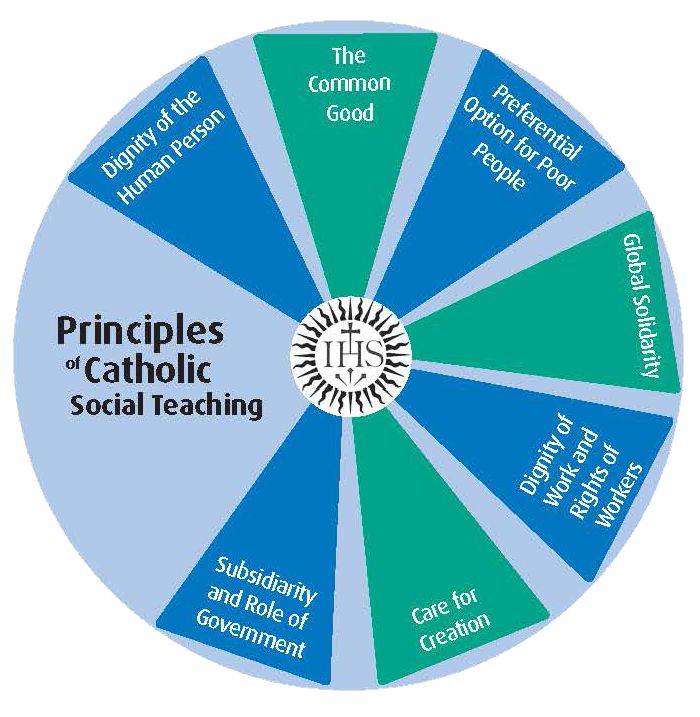
This is where Catholic Social Teaching becomes vital. The principle of the common good reminds us that technological design must serve human flourishing, not undermine it. Digital tools that exploit human weakness betray the dignity of the person and fracture communities.
Manipulation, Misinformation, and DEI
The harm of manipulation extends beyond individuals. In the realm of diversity, equity, and inclusion (DEI), algorithms can reinforce bias. Recommendation systems often reflect historical inequalities, showing fewer career opportunities to women or people of color, or amplifying harmful stereotypes. What masquerades as neutral technology can, in reality, replicate exclusion. Catholic Social Teaching insists that social justice principle of solidarity requires vigilance against such systemic injustices. We are called to build communities where technology empowers rather than marginalizes.
Reclaiming Agency
Examples of how we can safeguard human agency from AI influence abound. Social media platforms can be designed to maximize healthy interaction rather than outrage. A “time well spent” movement, rooted in the work of Tristan Harris, has pushed for features like usage dashboards and reminders to log off, tools that honor, rather than erode, human agency (Paul Marsden, “A Call to Minimize Distraction & Respect Users’ Attention,” 2018). Similarly, educators and parents can teach digital literacy, helping students recognize manipulation and  practice responsible freedom online.
Catholic thought offers a distinctive contribution: freedom is not just the ability to choose, but the responsibility to choose well. “The more one does what is good, the freer one becomes” (Catechism of the Catholic Church, no. 1733). This means that safeguarding freedom from AI manipulation is not only about resisting harmful design but also about cultivating virtue though discernment, moderation, and solidarity.
Conclusion
In an age when algorithms predict our desires and platforms shape our habits, the question is not whether we are influenced, but how. Catholic teaching insists that we remain responsible agents, created in God’s image and called to act with freedom. As Gaudium et Spes reminds us, our dignity lies in conscious and free choice directed toward the good (no. 17). Technology must never strip us of this calling. Instead, we must insist through design, regulation, and personal practice that AI serve human freedom, not undermine it.
If you would like to make a comment or ask a question, I can be reached at dtheroux@smcvt.edu. Let’s talk!

For all press inquiries contact Elizabeth Murray, Associate Director of Communications at Saint Michael's College.
Related News See more news