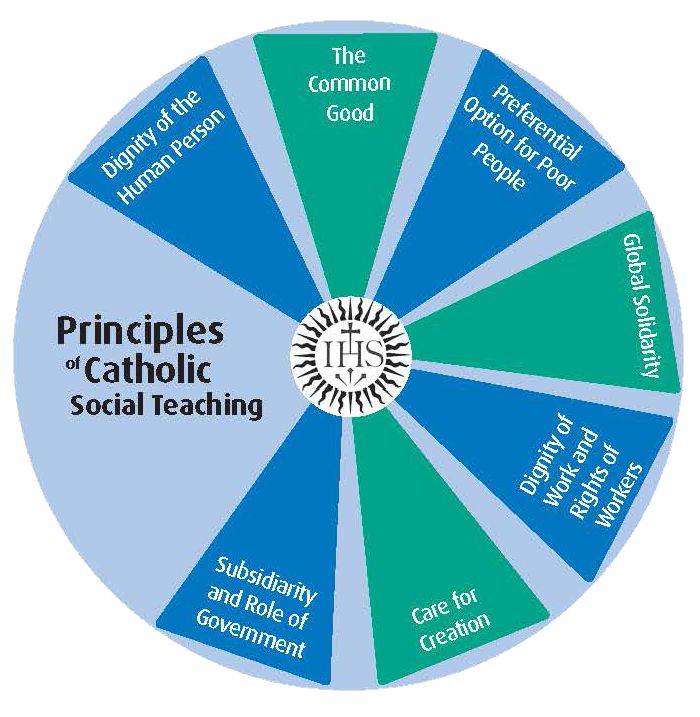
Work is more than a way to earn a paycheck. It shapes our sense of purpose, allows us to provide for our families, and connects us to the wider community. Through work, we contribute our talents, grow in skill, and participate in something larger than ourselves. Catholic Social Teaching insists that work is not merely about production or efficiency but about human dignity and vocation.
Yet today, in an era of automation and artificial intelligence, these fundamental truths about labor face new challenges. Machines increasingly take on roles once filled by people, and although this offers possibilities, it also raises the danger that efficiency will be valued more than human contribution.
The Threats of Automation
 The negative possibilities are real. Across industries, automation has displaced workers or transformed stable jobs into precarious gig work. The World Economic Forum estimated in 2020 that over 85 million jobs worldwide could be displaced by automation by 2025, even as new categories of work emerge (Future of Jobs Report, 2020, 29).
Catholic Social Teaching warns against such displacement when economic systems place efficiency and profit above people. Pope Leo XIII’s Rerum Novarum (1891) argued that labor is not a commodity to be discarded but a participation in human dignity itself. Later, Pope John Paul II in Laborem Exercens (1981) stressed that “work is a fundamental dimension of human existence” and cannot be reduced to mere productivity (no. 4). When machines replace workers without attention to justice, the result is not only unemployment but also loss of meaning and identity.
Consider the decline of manufacturing jobs in cities like Detroit, where automation combined with outsourcing hollowed out communities. Entire neighborhoods were left without sustainable work. The effect was not just economic but social: families fractured, schools closed, and civic life eroded. Such examples highlight CST’s warning that when people are treated as expendable, society itself suffers.
The Promise of Technology
 Yet Catholic tradition does not reject technology. Properly directed, automation can relieve human beings of dangerous, repetitive, or demeaning work. Robots in mining and construction now perform tasks in hazardous environments, reducing injuries and fatalities. In health care, AI is used to analyze X-rays or blood tests, speeding diagnoses and allowing doctors to spend more time with patients.
Pope Francis emphasized that technological development must be “at the service of another type of progress, one which is healthier, more human, more social, more integral” (Laudato Si’, no. 112). When automation frees people to engage in creative work, education, family life, or civic participation, it can advance rather than diminish human dignity. The challenge is to ensure that freed time and wealth are distributed justly. Otherwise, efficiency becomes the privilege of the few while others are left behind.
Work as Participation in Creation
 The anchor of CST is the conviction that work is sacred. From Genesis, where humanity is called to “till and keep” the earth (Gen 2:15), to Laborem Exercens, which describes work as co-creation with God, Catholic teaching insists that labor is not just about survival but about vocation. Technology must therefore support human work rather than erase human worth.
In practice, this means designing policies and institutions that ensure displaced workers are not abandoned. Programs for retraining, universal access to education, and just transition initiatives in industries like energy can embody solidarity. For example, when coal plants close, workers and communities must be supported in finding meaningful employment in renewable energy sectors. Such transitions demand attention to diversity, equity, and justice. Communities of color and low-income workers, who are often disproportionately affected by technological disruptions, must not be left to bear the burden alone.
The Path Forward
Catholic Social Teaching points us toward a balanced path. Automation and AI can either reinforce inequalities or become instruments of justice. The difference lies in whether economic structures honor the person. Pope Leo XIII in Rerum Novarum insisted that labor is always about more than wages. It is about human dignity. Pope John Paul II in Laborem Exercens reaffirmed nearly a century later that “work is ‘for man’ and not man ‘for work’” (no. 6).
 Some economists describe work in terms of rational exchange: the worker provides a set amount of labor over a set amount of time in return for wages, while the employer receives the productivity they desire. On the surface, this exchange is fair. Each side gets what it wants. Yet Catholic Social Teaching insists that this framework is incomplete. Work is not only an economic transaction but a human act. As John Paul II explained in Laborem Exercens, labor has both an objective dimension (the tasks performed) and a subjective dimension (the dignity and creativity of the worker) (no. 6). If labor is reduced only to rational exchange, worth is tied solely to productivity. If labor is understood as vocation, however, worth is tied to the person who works.
This tension is clear in the conditions at Amazon warehouses. Investigations have shown that employees are monitored constantly, pressured by quotas, and often injured in unsafe conditions, even as the formal contract of wages-for-labor appears balanced (Kantor, Weise, and Ashford, The New York Times, June 15, 2021). Catholic teaching reminds us that no contract can justify stripping labor of dignity.
In our automated age, the question is not whether machines can replace tasks, but whether society can remember that no machine can replace the worth of a person. To value efficiency above humanity is to forget the Creator’s design. To direct technology toward solidarity and justice is to live out our call to co-create a world where every person’s work, and every person’s worth, is honored.
If you would like to make a comment or ask a question, I can be reached at dtheroux@smcvt.edu. Let’s talk!

For all press inquiries contact Elizabeth Murray, Associate Director of Communications at Saint Michael's College.
Related News See more news