The Option for the Poor and Vulnerable: Empowering Voices, Not Silencing Them

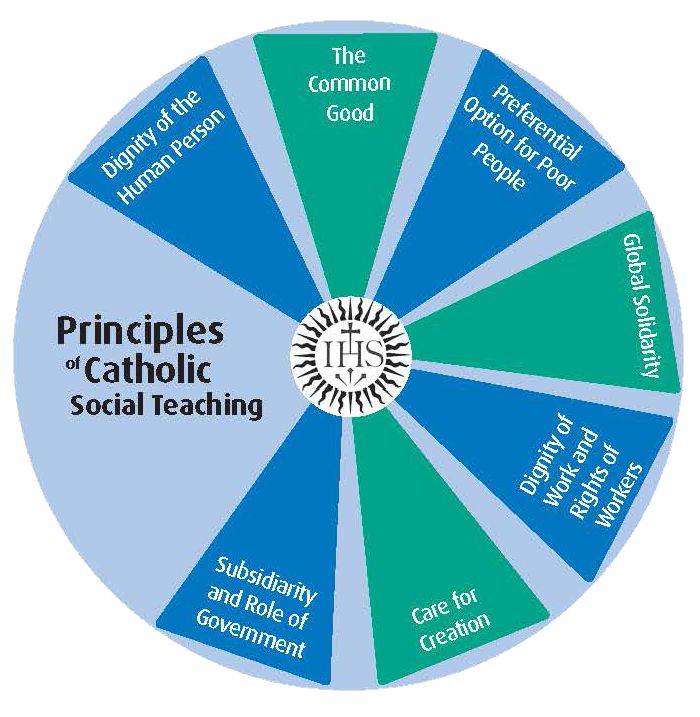
The fourth principle of Catholic Social Teaching, the Option for the Poor and Vulnerable, challenges us not merely to assist those in need but to stand with them in their pursuit of justice and dignity. It insists that the poor are not passive recipients of aid, but active participants in building a just society. At the heart of this principle is the belief that the poor and vulnerable possess the capacity to shape their own future, provided they are given the space and support to do so.
Brazilian educator Paulo Freire helps us understand why this distinction matters. In Pedagogy of the Oppressed, Freire critiques what he calls the “banking model” of education, where teachers deposit information into students as though they are empty accounts to be filled. This model mirrors the way society often functions: reproducing social inequality by  treating the poor as voiceless dependents and the wealthy as natural leaders. Education, under this model, becomes a hidden curriculum of compliance and silence, subtly training each class to stay in its place.
Freire offers a powerful alternative: education as liberation, rooted in dialogue and mutual discovery. When the poor engage in critical reflection on their lived experience, they begin to recognize not only the structures that confine them but also their power to challenge those structures. True education, then, is not about shaping the poor into something better; it is about awakening them to their own dignity and capacity for transformation.
This resonates deeply with the Gospel. In Luke’s account, Jesus begins his public ministry by proclaiming good news to the poor, liberty to captives, and freedom for the oppressed (Luke 4:18). This proclamation is not just spiritual; it is social and political. Jesus consistently engages the poor with reverence and reciprocity. He listens. He affirms their place in the Kingdom of God. He does not simply “do for” the poor; he “walks with” them.
Catholic teaching affirms this dynamic approach. Pope Francis reminds us in Evangelii Gaudium that the poor need more than charity. They need to be recognized, listened to, and accompanied. They must become protagonists of their own development, not merely objects of our good intentions. This requires an intentional shift in how institutions function: away from top-down planning and toward inclusive participation.
 The Society of Saint Edmund, especially through the Edmundite Missions in Selma, Alabama, embodies this approach in action. Since the era of segregation, Edmundite priests and laypeople have stood in solidarity with the Black and poor communities of the Deep South, not only offering food, shelter, and emergency aid, but also investing in education, community organizing, and spiritual empowerment. While “the handout” remains necessary because of enduring need, the deeper mission is always “the hand up.” This means creating space for people to claim their agency, articulate their hopes, and shape the systems that affect their lives.
Yet in too many settings—even classrooms and churches—a hidden curriculum persists. It teaches the poor that their role is to receive, not to lead; to accept their condition rather than challenge it. It rewards conformity over creativity, silence over questioning. Without even realizing it, we often replicate the very structures we claim to oppose.
 The Option for the Poor and Vulnerable calls us to name and dismantle those structures. It urges educators, pastors, and institutions to make real room for the wisdom of the poor by following their lead, not just serving their needs. It demands that we examine our own assumptions and ask hard questions: Are we creating dependency, or opportunity? Are we listening deeply, or deciding for others?
To follow Christ in this principle means to go beyond benevolence. It means walking with the poor as co-creators of a new future, one shaped not by inherited privilege or institutional inertia, but by justice, dignity, and hope born from below.
If you would like to make a comment or ask a question, I can be reached at dtheroux@smcvt.edu. Let’s talk!

For all press inquiries contact Elizabeth Murray, Associate Director of Communications at Saint Michael's College.
Related News See more news