When the exit polls began pouring in weeks following the 2024 election, there was one detail in particular that stuck out to Meg Clements ’26, inspiring her summer research project – particularly when considering who voted for Republican President Donald Trump.
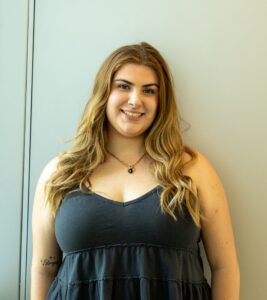
Meg Clements ’26 (Photo by Cassie Lathrope ’26)
“As more exit polls were coming out, you really started to see that a really big driving force behind Trump winning, especially in our area,” Clements said. “When you look at New England, it’s an extremely blue area, but among young men, it wasn’t at all. They were voting for Trump.”
Clements, a double major in Political Science and Spanish, was particularly intrigued by the number of Generation Z men, specifically between the ages of 18 and 27, who have voted more conservatively over the last 10 years. Through her research this summer, she aims to explore this shift and understand the factors that have contributed to it.
“When you look at past exit polls from the last election with Biden, there was definitely more of a swing, but the Democrats still had a large margin of young men voting for him,” Clements explained. “And same thing with when it was Trump who beat Clinton, but then when you look at it now, it’s like a 30-point margin. It’s a really large marginal shift.”
Why Gen Z?
With the mentorship of faculty advisor Dr. Trish Siplon, professor of Political Science and International Relations, Clements will be conducting her research using a mixed-methods approach. She began her study by examining published research to better understand her topic and how shifting political beliefs have evolved over the last decade. Some of Clements’ sources for her literature review included YouGov, Statistic, Pew Research, and Harvard Youth Poll.
Upon completing her literature review, Clements has taken to the field by conducting various focus groups aimed at understanding the reasons why so many of these young men have begun voting more conservatively.
“There isn’t actually a lot of research right now being done on it because it’s such a new phenomenon,” Clements said.
Clements has chosen to narrow her research to those who fit into the Generation Z category, as a shift of this magnitude has not been seen in other age groups.
“When you look at millennial men, we’re not seeing this shift among them, which is really interesting,” she said. “It’s not as large as it is with men like Gen Z.”
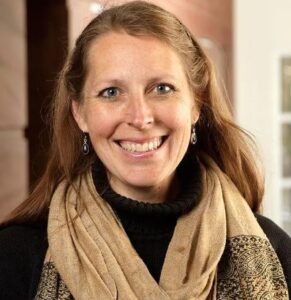
Trish Siplon
Investigating the “manosphere”
Before beginning her summer research, Clements took a course titled “Parties and Elections” with Political Science Professor Stephon Boatwright, along with Siplon’s Research Methods class, which directly educates students on the methods and procedures used by political scientists.
“Just as a general rule, it’s like a teacher’s dream when somebody’s like, ‘I want to take all these things I’m learning and do them right away,’” Siplon said. “I was really excited that she wanted to sort of go from the class to the project immediately.”
Clements’ interest in the topic also expanded from her personal experience and deep dive into an online space known as the “manosphere.” This online community refers to various YouTube videos, podcasts, TikToks, and other content produced by “self-help” influencers and content creators promoting masculinity and right-wing or misogynistic subject matter.
“These men will go on the internet looking for self-help, looking for ‘how can I talk to girls?’ ‘How can I get more fit?’ ‘How can I be more confident?’” Clements said. “This especially happened during COVID – people were lonely. People were looking for these outlets or places where they could find community with other men, and while they were being fed this self-help content, they were also being fed pretty misogynistic right-leaning content.”’
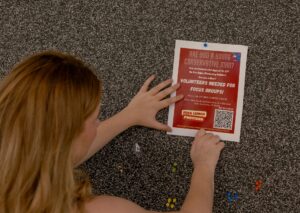
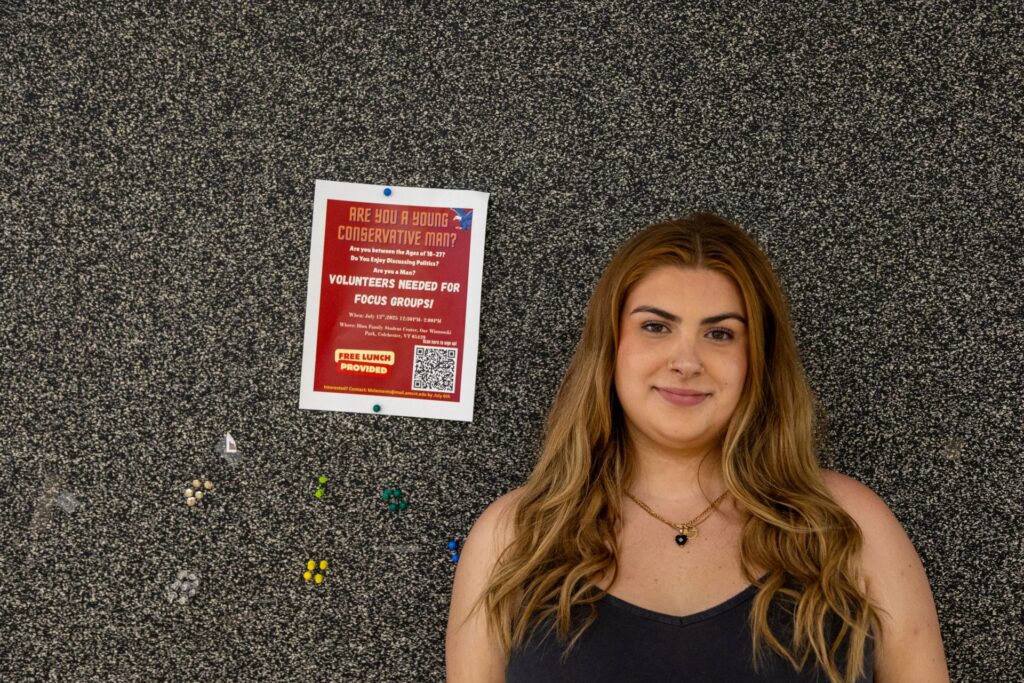
Meg Clements ’26 tacks up a flyer calling for participation in a focus group she is holding as part of her summer research project during summer 2025. (Photo by Cassie Lathrope ’26)
Conducting the research
Clements’ focus groups are geared toward conservative men within the Generation Z age range. But, a major obstacle, she said, has been trying to get participants.
“Getting people to commit to it is kind of the hard part,” Clements said. She mentioned that she has visited many “male-centered places,” such as bars and gyms, to find possible candidates for her research.
“I’ve reached out to a few frats and churches. I’ve even literally thought about going outside of Walmart or something,” she said
All participants in the focus group will remain anonymous. Before beginning the focus groups, Clements participated in the Institutional Review Board (IRB) approval process. She stated that this federal approval process is required by Saint Michael’s College to legally conduct focus groups.
For Clements, it is important that the questions she asks focus group members get to the heart of her research topic and do not contain political sway or bias. This is a particular area of her research process for which she has found it beneficial to consult Siplon.
“Crafting questions is really hard,” Clements said. “Questions that are not biased and yes or no questions. That is something that’s honestly pretty difficult to do. So [Siplon] has been super helpful with just being able to craft questions and stuff.”
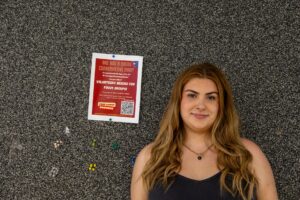
Meg Clements ’26 poses with the flyer she’s been hanging around campus calling for participants in a focus group for her summer research project. (Photo by Cassie Lathrope ’26)
Research Outcomes
Clements hopes her research will prompt more conversations around this and other political topics as well as foster a deeper mutual understanding among people with polarized beliefs. Perhaps it may even lead to more civil political discourse.
“You also need to give people the space to change,” Clements said. “People aren’t going to change unless they start to get out of those echo chambers and be around people that challenge their points of view, but not in a super malicious, judgmental way, just to get those gears running a little bit.”
Clements’ summer research project was made possible due to funding made available from grants through the Vice President of Academic Affairs Office. The funding, which has also been approved to support students who want to continue their research during the fall semester, encourages students to engage in deep academic inquiry.
“It may not be completely unique, but I do think it’s a very well-developed program, and it’s available in any discipline,” Siplon said. “I can’t say enough, I think it has been a launching pad for a lot of students.”

For all press inquiries contact Elizabeth Murray, Associate Director of Communications at Saint Michael's College.
Related News See more news