Viewpoint Diversity, Social Justice, and DEI: A Catholic College’s Way Forward Part II

 Last week, I wrote about the rising push from federal officials and legislators to enforce “viewpoint diversity” on college campuses. Some proposals even tie federal funding to ideological audits or mandate quotas for political perspectives. The problem isn’t the idea that higher education should engage a wide range of perspectives. Of course, it should. The problem is how this gets done. Do we expand intellectual breadth by strengthening research integrity and genuine dialogue, or do we allow outside forces to dictate quotas that compromise academic freedom?
That question naturally leads to a deeper one: what principles can guide Catholic colleges in balancing academic freedom, objectivity, and inclusion? This week’s reflection turns to two resources already close at hand: the Catholic Intellectual Tradition and Catholic Social Teaching. Together, they supply the “why” for resisting ideological control while embracing diversity, equity, and inclusion (DEI) as a practical expression of Catholic values.
The Catholic Intellectual Tradition and Social Justice: Our Compass
The Catholic Intellectual Tradition (CIT) points us to truth through disciplined inquiry. Ex corde Ecclesiae affirms both academic freedom and the autonomy proper to every discipline, always within the horizon of truth and the common good (John Paul II, Ex corde Ecclesiae, 1990, §29). Vatican II’s Gaudium et spes recognized the “legitimate autonomy” of culture and the sciences, presuming robust, method-driven debate rather than enforced ideological conformity (Second Vatican Council, Gaudium et spes, 1965, §59). Pope Francis, in Veritatis gaudium, goes further, urging universities to pursue research “in dialogue with the different sciences” for the good of the Church and society (Francis, Veritatis gaudium, 2017, §5).
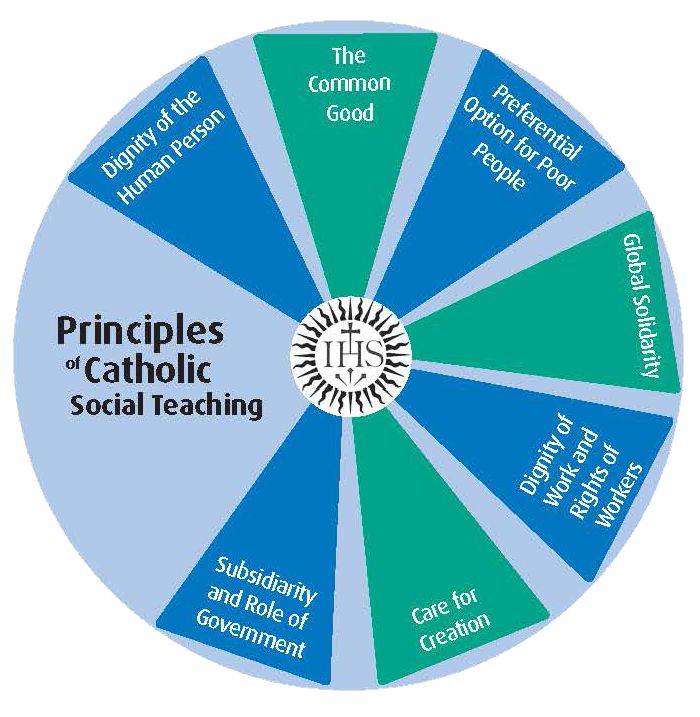
Catholic Social Teaching (CST) adds the social and ethical lens. The U.S. bishops summarize its core themes: dignity of the human person, the common good, rights and responsibilities, participation, option for the poor and vulnerable, solidarity, and care for creation (USCCB, “Seven Themes of Catholic Social Teaching,” usccb.org).
Subsidiarity, the principle that larger bodies should not usurp the responsibilities of smaller communities except when necessary for the common good, speaks directly to the danger of state micromanagement of curriculum and hiring (USCCB, “Subsidiarity,” 2023). Fratelli tutti extends the same principle outward, calling for social friendship and dialogue across differences (Francis, Fratelli tutti, 2020, §233). The bishops’ letter Open Wide Our Hearts adds urgency by naming racism as a persistent institutional sin that demands concrete reform (USCCB, Open Wide Our Hearts, 2018, 3).
Taken together, CIT and CST give Catholic higher education a clear compass: truth-seeking with integrity, inclusion as justice, and institutional independence grounded in mission.
Where DEI Belongs in a Catholic Frame
Too often, DEI is framed as a rival creed. In reality, it is a set of practical strategies for living out CST on campus. The Association of American Colleges and Universities’ Inclusive Excellence framework makes this connection clear, weaving diversity and equity into educational quality so that every student has the chance to flourish (Williams, Berger, and McClendon, Toward a Model of Inclusive Excellence, AAC&U, 2005). AAC&U’s “Making Excellence Inclusive” toolkits show how equity can be embedded in curriculum, pedagogy, hiring, and assessment (AAC&U, “Making Excellence Inclusive,” 2000).
When viewed through a Catholic lens, DEI work is not about political litmus tests. It is about three touchstones already rooted in CST:
- Dignity and participation: ensuring every student and colleague belongs.
- Solidarity and repair: recognizing wounds of exclusion and working toward healing.
- Subsidiarity in practice: letting faculty, staff, and students take responsibility for inclusive excellence rather than waiting for directives from politicians or bureaucrats.
A Catholic College Playbook
So, what is the guiding principle? It’s simple:
- Welcome viewpoint diversity when it broadens genuine scholarly conversation under rigorous methods.
- Reject it when it reduces inquiry to state-imposed quotas.
 Catholic colleges do not need outside audits to prove their seriousness. The synthesis is already within reach: protect academic freedom, practice open science, embed inclusion through CST and Inclusive Excellence, and teach students how to engage in respectful dialogue, grounded in charity, for the common good.
That path strengthens objectivity by following the Second Vatican Council’s call for “methodical research in all branches of knowledge” conducted “according to their own principles and methods” (Gaudium et spes, 1965, §59). It deepens Catholic identity by rooting academic life in the Church’s vision of truth pursued in freedom for the sake of the common good. And it serves students more faithfully than any legislative mandate ever could by aligning with leading academic standards for openness and rigor (National Academies of Sciences, Fostering Integrity in Research, 2017) and the American Association of University Professors’ principles of academic freedom and shared governance (AAUP, Statement on Government of Colleges and Universities, 2025).
If you’d like to continue the conversation, I welcome comments and questions at dtheroux@smcvt.edu. Let’s talk!

For all press inquiries contact Elizabeth Murray, Associate Director of Communications at Saint Michael's College.
Related News See more news