Across the U.S., schools and public institutions are being pressed to abandon diversity, equity, and inclusion (DEI) initiatives. The justification is often framed in positive terms: to avoid “divisiveness,” to ensure that all are included as “Americans,” and to create a level playing field free from favoritism. On the surface, this may sound like a generous gesture toward equality. But beneath the surface, the movement away from DEI is not neutral. It risks re-centering whiteness as the unspoken norm, erasing the unique experiences of marginalized groups, and undermining the Catholic commitment to justice and the dignity of every human person.
The Problem of “Common Nature”
Theologian Daniel P. Horan, relying on the thought of John Duns Scotus, offers an important lens for understanding why this shift is so problematic. Horan’s chapter titled “God Creates the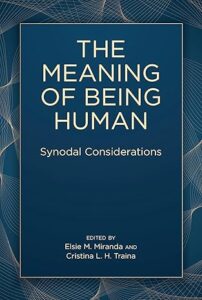 Particular: Human Dignity and Diversity in Theological Anthropology,” in The Meaning of Being Human, noted:
Practically speaking, in order to group creatures into such categories organized by a presumed ‘common nature,’ someone has to establish criteria to delimit who or what is in or out, what does or does not ‘make the cut’ in terms of qualifying for membership within a certain ‘common nature.’ While maybe not intentional, this way of thinking can lead to exclusionary and discriminatory practices when a person or thing is determined to not (or no longer) meet the standards or criteria for inclusion in the ‘common nature.’ And in the case of human persons, this can result in dehumanization and sometimes violence (15-16).
When institutions claim that all are now included under one common American identity, they are not in fact erasing categories. They are substituting one: the dominant cultural standard. In U.S. history, that “standard” has overwhelmingly been whiteness. The danger Horan names is real: inclusion framed as universal sameness actually functions as exclusion in disguise.
Experience on the Ground: Black Catholics in New Orleans
My own experience working among African Americans and Black Catholics in New Orleans confirms this dynamic. Black communities are not seeking to be treated as if they are indistinguishable from everyone else. They do not want their unique histories, struggles, and cultural gifts flattened into a generic American identity. What they long for is to be seen in their individuality and distinctiveness as communities with particular stories to tell and contributions to make.
 The problem with dismantling DEI in the name of a “neutral” inclusion is that such neutrality defaults to the already-dominant cultural baseline. Black Catholic worship, with its spirituality, music, and community bonds, is not simply another variety of Catholicism to be absorbed into a generic norm. It is a unique and irreplaceable gift to the wider Church. Erasing it under the guise of sameness amounts to erasing the very diversity that enriches the Body of Christ.
Catholic Social Teaching: Universality and Particularity
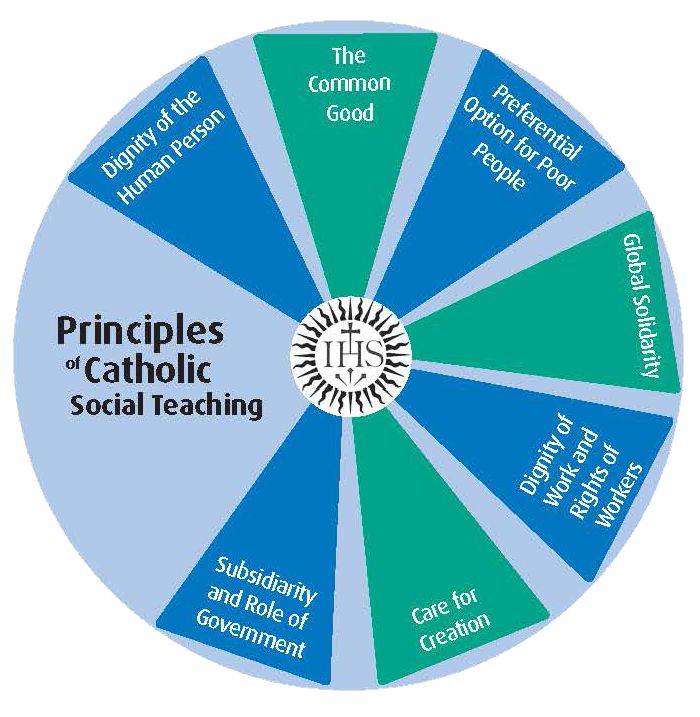
Catholic Social Teaching (CST) offers a critical corrective here. While it insists on the universality of human dignity — that every person is created in the image of God — it equally insists on the particularity of each culture and person.
- Gaudium et Spes (Second Vatican Council, 1965) speaks of the need to safeguard the “proper patrimony” of each people.
- John Paul II’s image of the Church breathing with “two lungs” illustrates that universality is not uniformity but a communion of distinct traditions (Egregiae Virtutis, 1980; Ut Unum Sint, 1995). For John Paul II, Christianity benefits from both the Eastern and Western expressions of the Christian faith and would be diminished if the particularity of each were lost to the other.
- Pope Francis, especially in Fratelli Tutti (2020) and Querida Amazonia (2020), critiques false universalism that erases difference. He insists that authentic solidarity requires valuing the unique gifts of each people and culture.
Thus, when institutions abandon DEI in favor of a supposed “general inclusion,” they contradict this Catholic vision. Instead of honoring diversity as a manifestation of God’s creative love, they risk re-inscribing the dominance of one culture under the mask of neutrality.
Why Abandoning DEI Is Harmful
There are four reasons why the abandonment of DEI is harmful.
First, it erases lived realities. By refusing to acknowledge race, culture, or history, institutions ignore the inequities and systemic injustices that continue to affect marginalized communities.
Second, it re-centers whiteness. Without intentional effort to address disparities, the cultural default becomes whiteness, often presented as the “neutral” way of being American or Catholic.
Third, it undermines genuine belonging. True belonging does not come from erasure but from recognition. Black Americans, Indigenous peoples, immigrants, and others want to be seen in their uniqueness, not absorbed into a false sameness.
Last, it violates Catholic commitments. A Catholic college that abandons DEI risks betraying the Church’s teaching on solidarity, subsidiarity, and the dignity of each person. To walk away from intentional diversity work is to walk away from the Gospel’s call to justice.
A Call to Catholic Colleges
For Catholic institutions of higher learning, the stakes are high. If we allow the cultural movement away from DEI to define our path, we risk becoming complicit in a subtle re-entrenchment of whiteness and the erasure of marginalized voices. But if we hold fast to Catholic Social Teaching, we can offer a counter-witness: affirming both the universality of human dignity and the irreducible particularity of each person and culture.
To abandon DEI is to abandon the very principles that make Catholic education distinctive: a commitment to justice, to the flourishing of the whole human person, and to the richness of a truly diverse human family.
If you would like to make a comment or ask a questions, I can be reached at dtheroux@smcvt.edu. Let’s talk!

For all press inquiries contact Elizabeth Murray, Associate Director of Communications at Saint Michael's College.
Related News See more news