Confronting the Masking of Belief and the Crisis of Nihilism on Campus
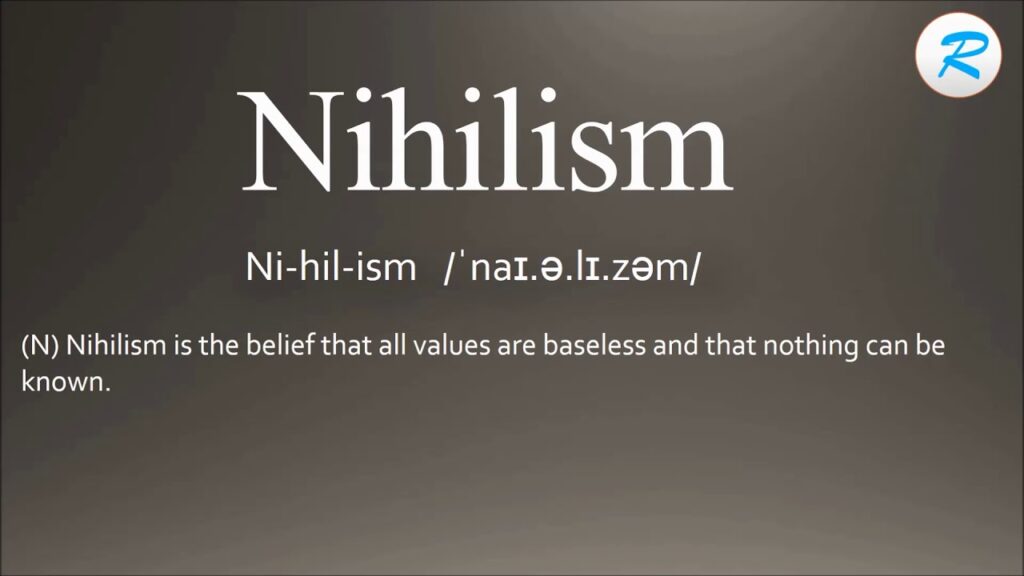
Commentators have noticed a curious trend among college students in the United States. While progressive frameworks dominate much of higher education—shaping classroom discussion, faculty research agendas, and campus activism—there is a quiet undercurrent of students who hold more conservative views. David Brooks has suggested that many of these students, rather than voicing their convictions, choose to mask them for fear of social backlash or academic penalty (“The Rise of Right-Wing Nihilism,” New York Times, April 21, 2025). This phenomenon reflects something deeper than political disagreement. It points to a crisis in higher education itself: the erosion of confidence in truth and the reduction of intellectual life to contests of power.
The cultural backdrop is what some have called the nihilism of contemporary American society: a “drive to destroy, by the will to power” (James Davison Hunter, “Culture Wars: The Endgame.” The Wilson Quarterly 15, no. 3 Summer 1991): 34–40). When belief in God or transcendent meaning wanes, human life can come to be defined by rivalry, competition, and cynicism. Students quickly learn that in such an environment, education becomes less about the pursuit of wisdom and more about maneuvering for acceptance within dominant ideological frameworks. Silence and conformity become survival strategies.
But the Catholic Intellectual Tradition, with its deep roots in faith and reason, offers a strikingly different vision. When paired with the Catholic principles of social justice, this tradition provides not only an antidote to nihilism but also a way for students to engage freely and openly in the search for truth.
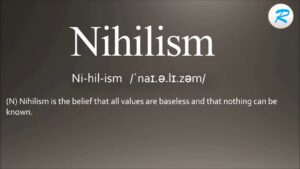 Nihilism and the Will to Power
Hunter’s phrase “the drive to destroy, by the will to power” echoes Philosopher Friedrich Nietzsche but translates his analysis into the American cultural landscape. For Hunter, the decline of transcendent belief has left cultural and political life defined by power contests (Hunter 1991, 36–37). In the absence of shared truths, rival groups pursue victory rather than dialogue.
Many students sense this dynamic in higher education today. Those who hold religious convictions, or who lean conservative on cultural or political matters, often report feeling that their views are unwelcome (David Brooks, “Lonely Campus Voices,” The New York Times, May 6, 2003). Instead of risking ostracism, they choose silence. This masking of belief is itself a symptom of the deeper cultural malaise: a loss of confidence that truth is real and that education is a shared search for it.
The Catholic Intellectual Tradition: A Way of Seeking
The Catholic Intellectual Tradition (CIT) offers an alternative. Far from being a closed system of doctrine, CIT is a living tradition of inquiry rooted in the conviction that truth exists, that it is knowable, and that faith and reason together illuminate the human condition. It is a tradition that has engaged with ancient philosophy, medieval scholasticism, modern science, and contemporary cultural critique.
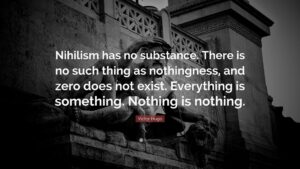 At its core, CIT affirms several convictions that directly address the masking of belief on campus. First, truth is real and worth seeking. Students should not fear speaking openly, because truth is not the possession of one party or ideology but the horizon toward which all inquiry points (John Paul II, Fides et Ratio, Vatican, 1998, §25). Second, faith and reason belong together. Against both secular reductionism and fideism, the tradition insists that questions of meaning and faith are legitimate within intellectual discourse (John Paul II 1998, §§55–56). Last, dialogue is essential. The Catholic approach does not silence difference but welcomes it as a way to deepen understanding (Monika Hellwig, “The Catholic Intellectual Tradition in the Catholic University,” Examining the Catholic Intellectual Tradition, 2000, 8–9). For students weary of the power dynamics of campus culture, this vision can be liberating. It invites them to bring their whole selves—including their deepest beliefs—into the conversation.
Catholic Social Teaching: A Framework Beyond Ideology
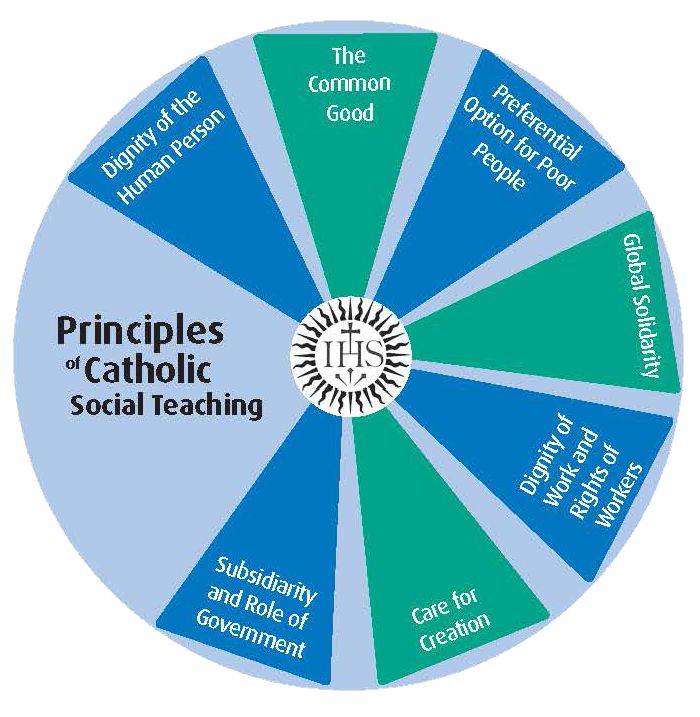
Alongside the Catholic Intellectual Tradition stands Catholic Social Teaching (CST), a body of reflection on how faith informs life in community. CST is especially important in the polarized environment of higher education because it cuts across conventional political categories.
- The life and dignity of the human person resonates with concerns often labeled “conservative,” such as the sanctity of life and moral responsibility (USCCB, Seven Themes of Catholic Social Teaching, 2005).
- The principles of solidarity and the preferential option for the poor align with concerns often labeled “progressive,” such as inclusion, justice, and care for the marginalized (Francis, Laudato Si’, 2015, §§158–162).
- Care for creation challenges consumerist excess and calls all sides to responsibility for the environment (Francis 2015, §§66–69).
By drawing on CST, Catholic institutions can show students that their moral and political questions cannot be reduced to left versus right. Instead, CST offers a vision of social life grounded in human dignity and the common good.
Catholic Higher Education: An Opportunity and a Responsibility
For Catholic colleges and universities, the moment presents both challenge and opportunity. If Catholic institutions simply mirror the ideological uniformity of secular campuses, they will reinforce the very nihilism young people are resisting. But, if they are faithful to their own intellectual and social tradition, they can become spaces where students are free to engage openly, where masking is unnecessary, and where truth itself is the shared horizon.
This requires courage. It requires faculty to model dialogue rather than ideological enforcement. It requires administrators to articulate clearly the Catholic mission of the institution. And it requires students to be invited into an environment where questions of meaning and faith are not dismissed but welcomed.
Conclusion: Toward a Culture of Truth
 The crisis of nihilism in American higher education has left many students feeling that the safest path is to hide what they truly believe. Yet this very crisis opens a door for Catholic higher education to reclaim its distinctive role. The Catholic Intellectual Tradition and the principles of Catholic Social Teaching together provide a framework where truth is real, dialogue is possible, and social life is oriented toward justice and the common good.
In such an environment, students need not mask their beliefs. Instead, they can participate freely in the search for truth—a search that does not destroy but builds up, that does not reduce to power but opens to wisdom, and that ultimately points beyond ideology to God, the source of all truth.
If you would like to make a comment or ask a question, I can be reached at dtheroux@smcvt.edu. Let’s talk!

For all press inquiries contact Elizabeth Murray, Associate Director of Communications at Saint Michael's College.
Related News See more news