This post is part of a series: Applying the Principles of Catholic Social Justice to Contemporary Issues.
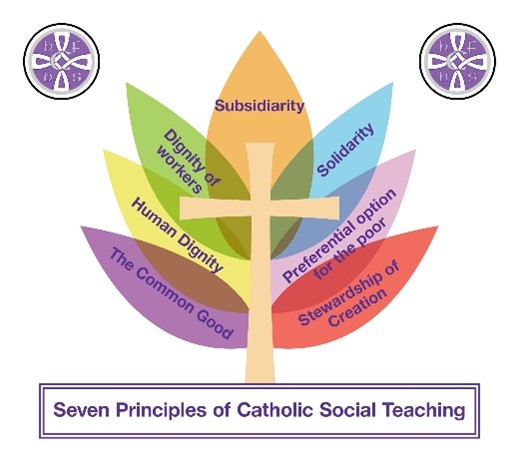
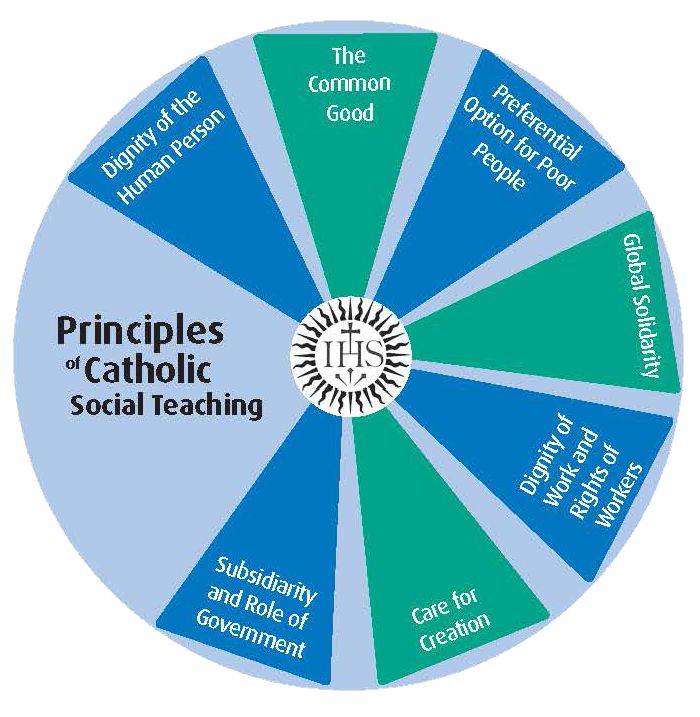
In recent years, a growing number of federal and state officials in the U.S. have argued that colleges and universities must be restrained in the name of equal treatment, merit, neutrality, and viewpoint balance. On one level, such language has obvious moral appeal. Equal treatment matters. Catholic Social Teaching also insists that each human person possesses an inviolable dignity and that institutions should reject unjust discrimination (USCCB, Seven Themes of Catholic Social Teaching). Yet in higher education, a more difficult question now arises: when does a legitimate concern for fairness become an attempt by government to control the intellectual life of the university?
That question is no longer abstract. At the federal level, the White House executive order of April 23, 2025, “Restoring Equality of Opportunity and Meritocracy,” explicitly rejects the use of  disparate impact frameworks and insists on a strongly individual understanding of equality. As noted in the executive order, “It promises that people are treated as individuals, not components of a particular race or group. It encourages meritocracy and a colorblind society, not race- or sex-based favoritism.” The U.S. Department of Education’s 2025 Agency Financial Report presents this approach as central to its work and states that the Department eliminated Diversity, Equity, and Inclusion (DEI) and Diversity, Equity, Inclusion, and Accessibility (DEIA) structures within its own operations. In effect, the federal government is not simply enforcing existing civil rights law. It is advancing a particular understanding of what fairness requires and using that understanding to influence the climate of higher education. (whitehouse.gov; ed.gov)
At the state level, the movement is even more direct. Texas SB 17 prohibits public colleges and universities from maintaining diversity, equity, and inclusion offices and restricts related hiring and training practices. Mississippi’s HB 1193 prohibits certain DEI-related activities in both public schools and public postsecondary institutions. Other states have pursued policies requiring viewpoint diversity surveys, prohibiting mandatory ideological statements, or sharply limiting how race, sex, structural inequity, and identity may be addressed in public education. PEN America reported in January 2026 that in 2025, lawmakers introduced 93 bills censoring higher education across 32 states, with 21 enacted in 15 states. Whether these laws are praised or criticized politically, they reveal the same underlying reality: government at multiple levels is increasingly trying to determine not only how institutions are funded or regulated, but also how they understand themselves and what may be taught under the banner of fairness. (capitol.texas.gov; HB1193 (As Passed the House) – 2025 Regular Session; pen.org)
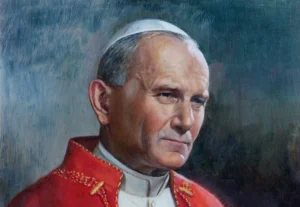 For a place like Saint Michael’s College, this matters deeply. A college is not only a provider of credentials. It is a community ordered toward inquiry, judgment, and the disciplined search for truth. Catholic teaching has long defended that work. Pope John Paul II’s Ex Corde Ecclesiae states that a university possesses the “institutional autonomy necessary to perform its functions effectively” and that academic freedom is to be guaranteed so long as the rights of the individual person and the common good are preserved (1990, no. 12). The same document insists that Catholic universities should be recognized by civil society as possessing the autonomy needed to carry out their mission (1990, no. 38). These statements are not special pleading for religious institutions. They express a broader truth: education cannot serve society well if political authorities gain too much power over what may be asked, explored, or taught.
Catholic social thought does not deny the proper role of the state. Government should prohibit unlawful discrimination, uphold justice, and protect the rights of people. The American bishops’ social teaching on rights and responsibilities assumes as much (USCCB, Seven Themes of Catholic Social Teaching). But Catholic thought also resists the reduction of every social institution to an arm of the state. The principle of subsidiarity teaches that higher orders should not absorb the proper functions of lower communities when those communities can carry out their responsibilities themselves. A university, including a Catholic liberal arts college, is one such  community. Its work is not simply administrative or political. It is intellectual and moral. That is why state attempts to manage the boundaries of inquiry are so serious. They touch the very purpose of higher education.
Vatican II helps name the deeper danger. Gaudium et Spes teaches that conscience is the “most secret core and sanctuary” of the human person, where one is alone with God (1965, no. 16). The university serves that human dignity precisely by forming judgment rather than replacing it. If the state increasingly narrows what can be discussed or what kinds of institutional commitments are acceptable, then the classroom is no longer a place where truth is pursued in freedom. It becomes a place where intellectual life is managed in advance.
For Saint Michael’s, then, the issue is not whether equality matters. It does. The issue is whether equality is being invoked in a way that weakens the university’s mission. Catholic social teaching supports justice, fairness, and the dignity of every student. It does not support turning colleges into instruments of political supervision. When equal treatment becomes a rationale for classroom control, the common good of higher education is diminished rather than served.
If your would like to make a comment or ask a questions, I can be reached at dtheroux@smcvt.edu. Let’s talk!

For all press inquiries contact Elizabeth Murray, Associate Director of Communications at Saint Michael's College.
Related News See more news