Advancement of Human Culture: Liberal Education as a Commitment to Justice and the Common Good
The mission of Saint Michael’s College is to contribute through higher education to the enhancement of the human person and the advancement of human culture in the light of the Catholic faith.
Saint Michael’s mission commits the institution not only to forming individuals but to advancing human culture, a charge that carries explicit moral, civic, and social responsibility. This commitment includes preparing graduates to confront persistent realities such as poverty, discrimination, and structural oppression, not merely to participate successfully in dominant cultural systems.
Scripture frames this responsibility in public and ethical terms. Jeremiah 29:7 calls God’s Israelite people to seek the welfare of the city to which they are exiled. Matthew 5:13–16 presents discipleship as a moral obligation to shape society rather than withdraw from it, and Saint Paul urges Christians to live as responsible citizens, “ready for every good work” in public life (Titus 3:1; cf. Romans 13:1). These texts ground education in a mandate to contribute to social order while also working toward greater justice and human dignity.

“Martha C. Nussbaum (b. 1947) and Neil Postman (1931–2003), influential critics of market driven education and defenders of purpose centered liberal learning.”
Contemporary educational thinkers reinforce this imperative. Martha C. Nussbaum warns that higher education oriented narrowly toward economic productivity weakens democratic culture by neglecting critical reasoning, moral imagination, and concern for marginalized populations (Not for Profit: Why Democracy Needs the Humanities, 2010). Neil Postman argues that education lacking a compelling moral purpose collapses into training for market utility rather than formation for meaning, responsibility, and social critique (The End of Education: Redefining the Value of Schools, 1995). Read in the light of the Catholic faith, their critiques underscore Saint Michael’s commitment to educate students toward a moral horizon defined by human dignity, the preferential option for the poor, solidarity, and the common good.
This mission has concrete institutional implications. Advancing human culture requires curricular pathways that foster ethical reasoning, historical consciousness, and critical analysis of social structures that perpetuate inequality. It calls for experiential learning that engages students with communities affected by poverty, racism, and exclusion, not as objects of charity but as partners in solidarity. It also invites sustained attention to how professional programs prepare graduates to shape workplaces, public institutions, and economic systems in ways that promote fairness, access, and accountability.
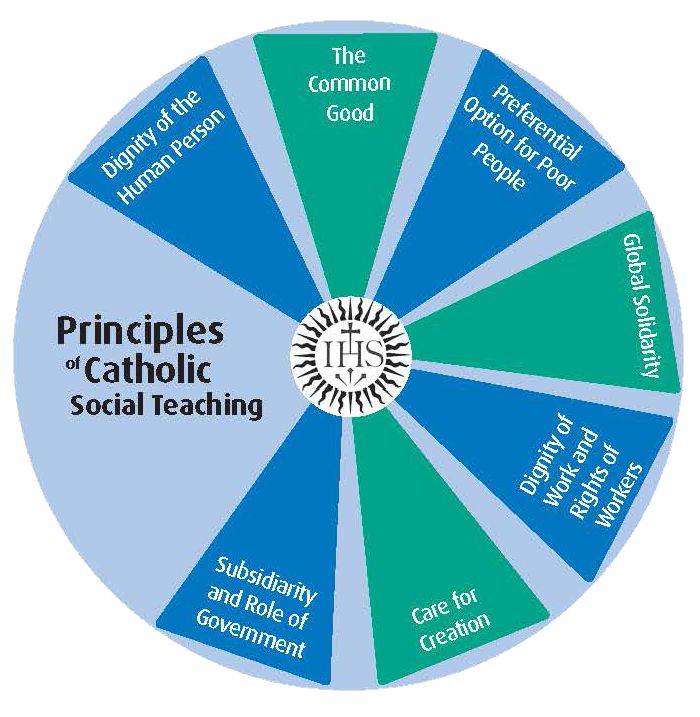
Catholic social teaching provides a normative framework for this work. Principles such as the dignity of the human person, solidarity, subsidiarity, and the preferential option for the poor orient institutional priorities toward social transformation rather than mere individual advancement. Laborem Exercens affirms the dignity of work while also calling institutions to challenge economic arrangements that exploit or marginalize vulnerable populations.
From a governance perspective, the advancement of human culture should function as a measurable mission criterion. Trustees and senior leaders might ask: How effectively does the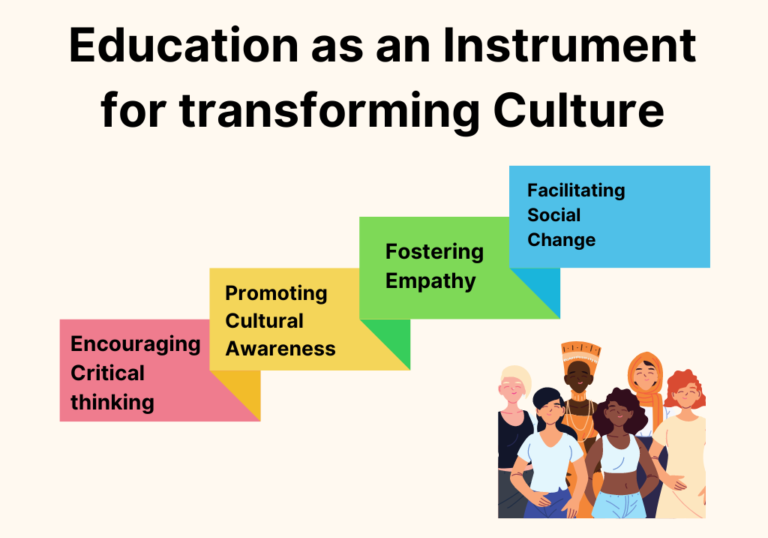 curriculum prepare students to recognize and challenge systemic injustice? How do community partnerships embody reciprocal engagement rather than one-directional service? How do assessment practices capture graduates’ long-term contributions to social equity, civic leadership, and the common good?
In a time marked by widening economic inequality, racial injustice, and political polarization, this dimension of the mission offers a clear institutional identity. Saint Michael’s is not only preparing students for employment or citizenship within existing structures. It is forming graduates who are equipped to renew culture, confront injustice, and help build a more humane and equitable society.
To claim the advancement of human culture is to accept responsibility for shaping not only competent professionals, but agents of justice. That responsibility lies at the heart of what it means to educate in the light of the Catholic faith.
If you would like to contribute a comment or ask a question, I can be reached at dtheroux@smcvt.edu. Let’s talk!

For all press inquiries contact Elizabeth Murray, Associate Director of Communications at Saint Michael's College.
Related News See more news