Enhancement of the Human Person: Formation as a Core Institutional Outcome
The mission of Saint Michael’s College is to contribute through higher education to the enhancement of the human person and the advancement of human culture in the light of the Catholic faith.
 The mission of Saint Michael’s College asserts that higher education exists not only to transmit knowledge but also to contribute to the enhancement of the human person. This phrase carries significant implications for institutional priorities, curricular design, student life strategy, and assessment. It situates formation as a core outcome of the College, alongside academic achievement and career preparation.
Theologically, the mission rests on an anthropology grounded in the conviction that each person is created in the image of God (Genesis 1:27). This claim establishes human dignity as intrinsic rather than instrumental and resists the reduction of students to economic actors or market-driven learners. The College’s work, therefore, is not merely to produce graduates but to nurture persons capable of intellectual judgment, moral agency, relational maturity, and vocational discernment.
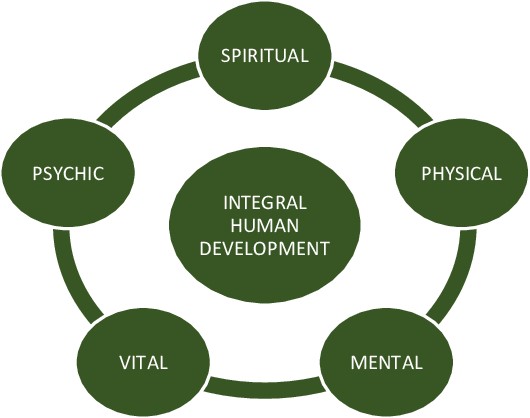
Luke 2:52 provides a concise biblical framework for integral formation, describing growth in wisdom, maturity, and favor with God and others. This aligns with what developmental scholars describe as the task of emerging adulthood. Sharon Daloz Parks characterizes emerging adults as individuals roughly between the late teens and early thirties who are forming identity, commitments, and meaning in a complex world. College is one of the primary environments where students learn not only to think critically, but also to discern values, take responsibility, and shape a sense of purpose (Big Questions, Worthy Dreams). James Fowler similarly describes this stage as a movement from inherited beliefs toward personally examined and owned commitments (Stages of Faith).
When taken seriously, these insights invite institutions to define student success beyond GPA, retention, and post-graduation employment. They call for intentional design of learning environments that support cognitive complexity, ethical reasoning, emotional resilience, and the capacity for commitment. Formation, in this sense, becomes an institutional responsibility rather than an incidental byproduct.
Within Catholic higher education, this responsibility has been articulated in magisterial teaching. Ex Corde Ecclesiae frames the Catholic university as a community dedicated to the formation of the whole person in the light of truth, moral responsibility, and the integration of faith and reason. Pope Francis has further emphasized education as the cultivation of a “culture of encounter” that forms persons capable of solidarity, dialogue, and service (Fratelli Tutti).
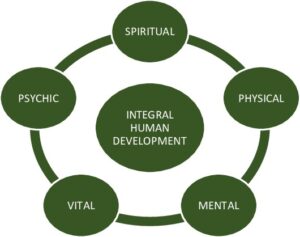 Operationally, this vertex of the mission suggests several institutional commitments. Curricular pathways should be structured to develop not only disciplinary expertise but also integrative thinking, ethical reflection, and intellectual humility. Co-curricular programs should intentionally support identity development, leadership formation, and vocational exploration. Faculty and staff roles should be understood not only as delivering content or services, but as participating in a broader formative ecology.
Assessment practices may also require recalibration. If enhancement of the human person is a mission-critical outcome, institutions should consider how to measure growth in areas such as moral reasoning, civic responsibility, sense of purpose, and capacity for dialogue across difference. While these dimensions resist simple quantification, qualitative and mixed-method approaches can provide meaningful insight into formative impact.
Finally, this aspect of the mission shapes institutional culture. Hiring, promotion, advising, mentoring, and student support structures all contribute to whether the College genuinely functions as a community of formation. The question for leadership is not only whether programs align with mission in theory, but whether structures, incentives, and resource allocations reinforce formation in practice.
To claim the enhancement of the human person as a mission pillar is to accept a demanding institutional vocation. It requires coherence between stated values and operational realities. Yet, it also provides a powerful foundation for articulating what distinguishes Saint Michael’s: not simply what graduates know or earn, but who they become.
If you would like to make a comment or ask a question, I can be reached at dtheroux@smcvt.edu. Let’s talk!

For all press inquiries contact Elizabeth Murray, Associate Director of Communications at Saint Michael's College.
Related News See more news