In his New York Times opinion piece “Foreign Aid Is Mostly Gone. It Could Be Replaced with Something Better,” written some time ago now (October 13, 2025), Rajiv J. Shah, former 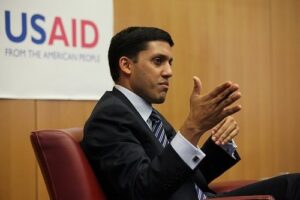 director of the United States Agency for International Development, warns that wealthy nations are retreating from their long-standing moral and humanitarian responsibilities. The closing of USAID and similar aid reductions by the United States, Canada, Britain, and Germany, he argues, mark the collapse of a global system that once helped cure disease, reduce hunger, and strengthen human dignity. Research estimates that more than fourteen million lives (nearly a third of them children) may be lost because of these aid cuts. Shah calls this a moral failure, but he also points toward new hope: a shift in which developing nations themselves take greater leadership, using technology, private investment, and political will to lift their people out of poverty.
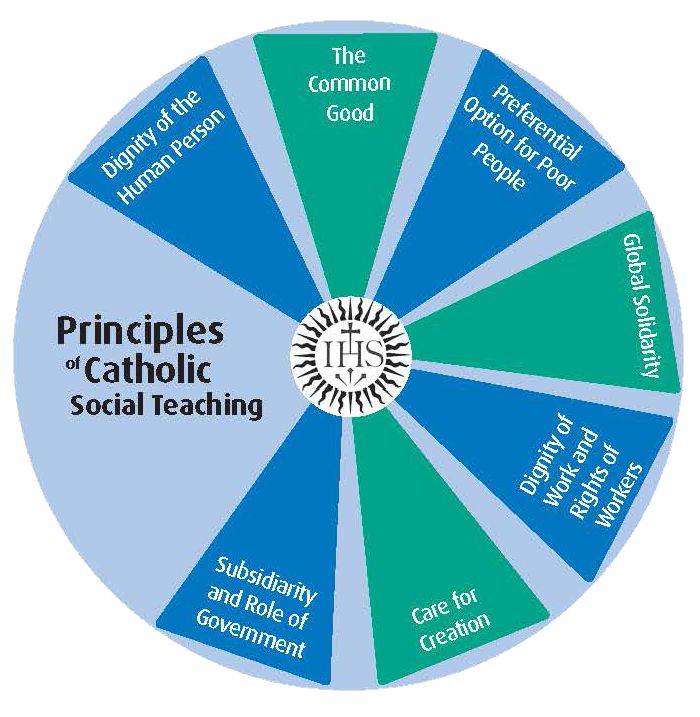
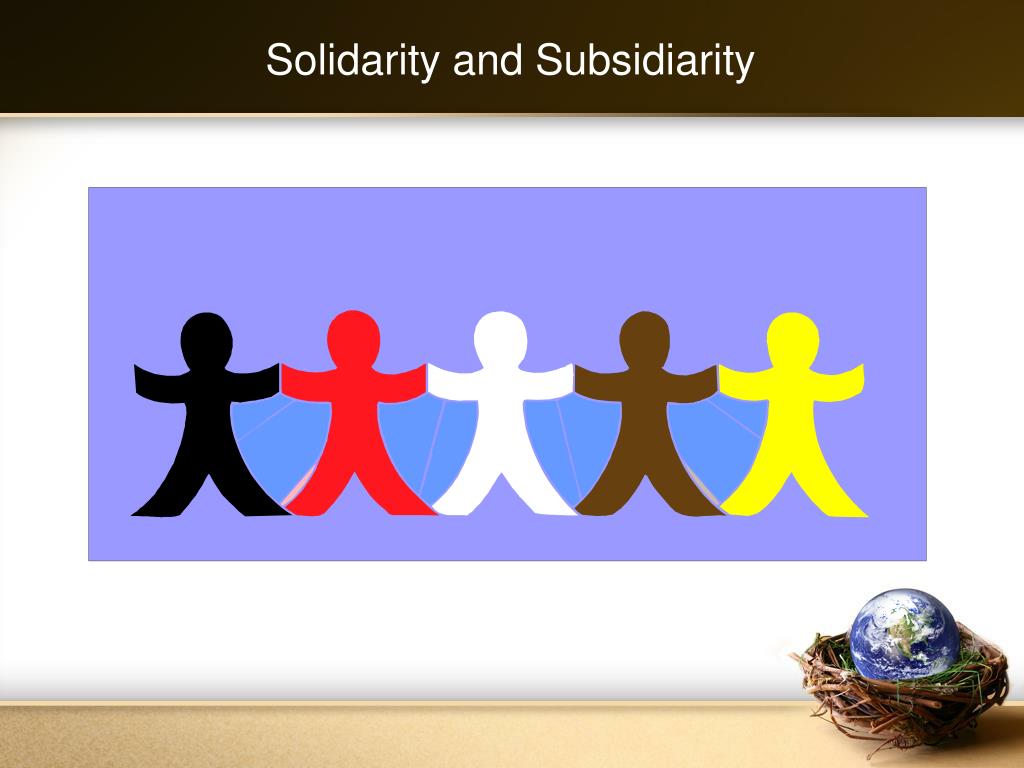
Catholic social teaching offers two powerful lenses through which to evaluate Shah’s analysis: solidarity and subsidiarity. These principles are not opposites but partners. Solidarity calls us to stand with those who suffer, recognizing that we are one human family, bound together by God’s love. Subsidiarity insists that decisions should be made at the most local level capable of addressing a problem, respecting the dignity and agency of persons and communities. Together, they teach that authentic development must combine shared global responsibility with local empowerment, never one without the other.
Viewed through the lens of solidarity, Shah’s concern about the decline of foreign aid is entirely justified. The retreat of wealthy nations from the global common good reflects an erosion of moral commitment. To turn away from those whose lives depend on assistance is to deny the fundamental truth that human dignity is universal. Solidarity reminds us that global development is not simply about mutual benefit, that is, reducing disease abroad to protect ourselves at home, but about recognizing that every life bears the image of God. When nations act only out of self-interest, they weaken the bonds that hold humanity together.
Yet solidarity also requires more than charity. It calls for partnership and shared ownership of progress. Here, Shah’s account of new leadership arising from Africa, Asia, and Latin America resonates deeply with Catholic thought. The image of African nations uniting to bring electricity to 300 million people by 2030, or of governments investing in school meal programs funded largely from their own budgets, embodies a movement from dependency to agency. This is solidarity in its mature form: mutual, reciprocal, and grounded in respect.
Subsidiarity helps us see why this local leadership matters. For decades, development decisions were driven by distant donors and large international institutions. While these systems saved lives, they often ignored the voices of those they aimed to help. Shah’s critique of that centralized model echoes Catholic teaching: when higher authorities assume responsibilities that rightly belong to local communities, they risk stifling initiative and dignity. The  emerging model he describes, rooted in national ownership and regional cooperation, aligns more closely with subsidiarity because it restores responsibility to those closest to the issues.
At the same time, subsidiarity is not isolationism. It does not mean that wealthier nations can simply step away. When local capacity is fragile, those with greater resources remain morally obliged to assist. In this light, Shah’s call for debt forgiveness and targeted international support is not a retreat from subsidiarity but its fulfillment. Higher levels of assistance are justified only when they strengthen lower levels of governance and do not replace them.
Still, there are cautions. Shah’s emphasis on private investment as a development engine can risk sidelining the very poor, whose needs often yield little profit. Without strong moral oversight, market solutions may deepen inequality rather than relieve it. The preferential option for the poor, another cornerstone of Catholic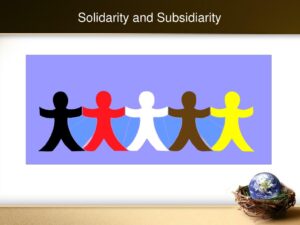 social teaching, reminds us that the measure of any system is how it treats the most vulnerable. Development driven by profit alone is not development in the Christian sense.
Shah’s vision, viewed through the twin lenses of solidarity and subsidiarity, reveals both promise and peril. His optimism about new leadership among developing nations affirms the dignity and capacity of local peoples to direct their own futures. Yet his warning about the moral collapse of global aid also calls us to conversion. The challenge for our time, and for Catholic higher education, is to form students and leaders who can hold these two truths together: that human dignity is universal and that authentic change begins close to home. When solidarity and subsidiarity are joined, hope is restored, and the work of building a just world continues.
If you would like to make a comment or ask a question, I can be reached at dtheroux@smcvt.edu. Let’s talk!

For all press inquiries contact Elizabeth Murray, Associate Director of Communications at Saint Michael's College.
Related News See more news