An Economy for People, and What Its Global Reach Requires: Applying Catholic Social Teaching to Contemporary Issues
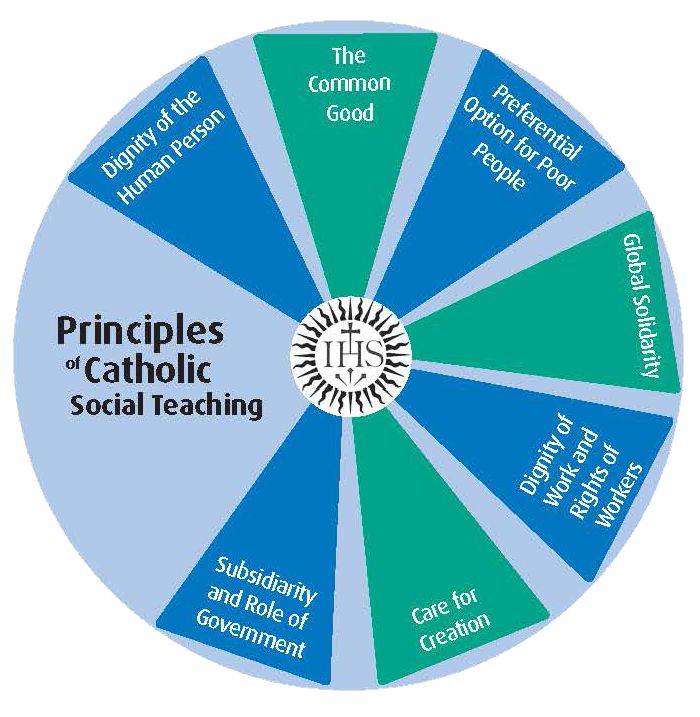
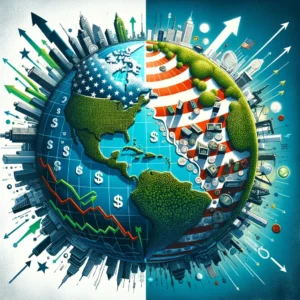 Catholic Social Teaching gives us a demanding but practical standard for judging economic life. The U.S. bishops put it plainly: the economy exists for the person, not the person for the economy (A Catholic Framework for Economic Life). Pope John Paul II made the same claim when he stated that the person is the “true purpose of the whole process of production” (Laborem Exercens, 1981, n. 6).
That principle does not apply only inside a nation’s borders. In a globalized world, it also raises a larger question: when the American economy is as large and influential as it is, does it serve people only at home, or does it help shape a just global economy as well?
An Economy in the Service of the American Nation
It is fair to begin by saying that the American economy does serve the American people in substantive ways. It creates jobs, supports innovation, and generates goods and services on a scale that allows millions of households to live with a degree of material security and opportunity.
Work, in Catholic thought, is not only a way to earn income. It is also a way people exercise responsibility, participate in society, and contribute to family and community life. To the extent that the American economy makes this possible for many people, it is doing something morally important.
It is also understandable that U.S. policymakers defend tariffs, industrial policy, and energy expansion in people-centered terms. They often argue that these policies protect jobs, strengthen manufacturing, rebuild domestic capacity, secure supply chains, and reduce vulnerability to geopolitical shocks. Those aims should not be dismissed. Catholic Social Teaching does not require a nation to be indifferent to the livelihoods of its workers or to the resilience of its economy.
An Economy in the Service of a Global Community
But Catholic Social Teaching asks a second and deeper question. Is the economy serving people fully and justly, or is it protecting some people in the short-term while shifting costs onto others, including people in other countries and future generations?
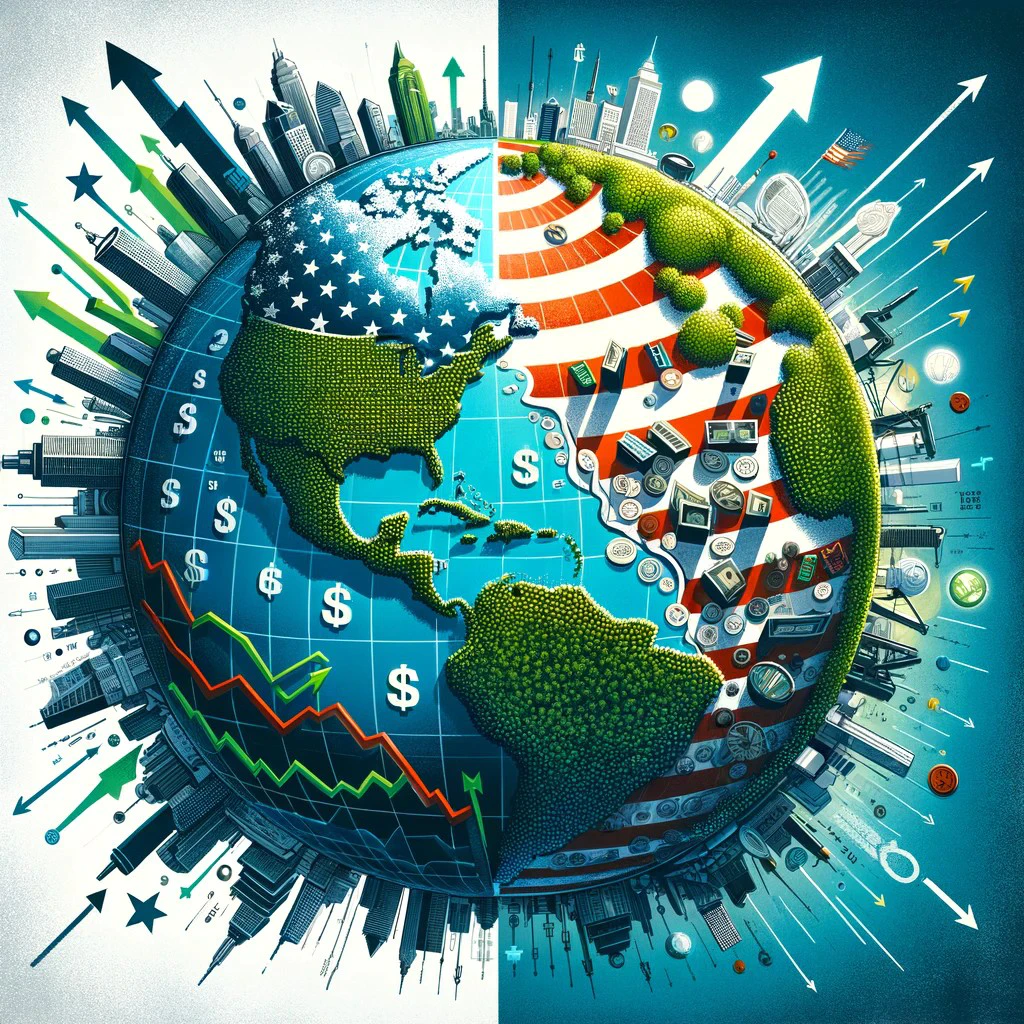
This is where the American economy’s global impact becomes central. The U.S. is not simply one economy among others. It is a major driver of trade patterns, financial flows, corporate investment, energy demand, and consumption. Decisions made in Washington, D.C., and in American boardrooms affect not only workers in Ohio or Texas but also factory workers in Vietnam, farmers in Latin America, miners in Africa, and communities around the world facing environmental stress. When the U.S. changes tariffs, supply-chain rules, or energy priorities, the effects ripple across wages, prices, and employment far beyond U.S. borders.
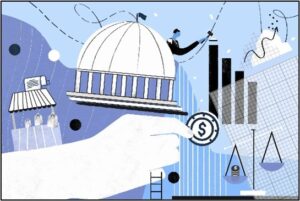 That means a Catholic moral assessment of the American economy cannot stop with domestic outcomes. It must ask what kind of global economic order American policy is helping to build.
For example, tariffs may be used to protect strategic industries and preserve domestic jobs. In some cases, that may be justified. But tariffs can also raise prices for American families, disrupt planning for businesses, and create instability for workers in exporting countries whose livelihoods depend on access to U.S. markets. If a policy protects one set of workers while imposing severe burdens on others without a proportionate and carefully considered reason, Catholic Social Teaching calls for moral scrutiny, not automatic approval.
The same is true for energy policy. Affordable and reliable energy is essential for families and for economic life. Yet the U.S. economy also has an outsized influence on global emissions, energy investment, and climate policy signals. Pope Francis insisted that the climate is a common good and that ecological harm falls most heavily on the poor (Laudato Si’, 2015). A narrowly domestic energy strategy may appear successful if it lowers some costs and increases production, but it remains morally incomplete if it deepens environmental harm that will be borne disproportionately by vulnerable communities, both in the U.S. and around the world.
The Central Question
The central question is not whether the American economy benefits Americans. It clearly does in many ways. The deeper question is whether American economic strength is being directed toward a form of prosperity that is just, sustainable, and responsible within an interdependent world.
 To truly serve the American people, economic policy must be judged by whether families can actually afford housing, food, health care, and energy with stability and dignity, not merely by whether aggregate economic indicators look strong. To act responsibly in the global economy, U.S. trade and industrial policy must be strategic and fair, protecting legitimate national interests while avoiding unnecessary disruptions that harm workers and communities abroad. To be genuinely people-centered over the long term, American energy policy must balance jobs and affordability with environmental responsibility, because the costs of ecological neglect are eventually paid by real people, especially the poor. And to meet the full standard of Catholic Social Teaching, the U.S. must measure economic success not only by output, profits, or market performance, but by whether its economic power advances human dignity, solidarity, and the common good at home and beyond its borders.
If you would like to make a comment or ask a question, I can be reached at dtheroux@smcvt.edu. Let’s talk!

For all press inquiries contact Elizabeth Murray, Associate Director of Communications at Saint Michael's College.
Related News See more news