Study Abroad Programs
Study Abroad at SMC: Pre-Approved Programs
Saint Michael’s College offers over 100 pre-approved programs for students interested in studying abroad during the summer, winter-session, semester, or academic year. Location, language of instruction, course offerings, method of instruction, and fit with career aspirations are elements that should be considered when deciding upon a program of study.
Language Programs help students learn a new language or increase proficiency in a language taught at Saint Michael’s. Students with advanced language skills may choose to take content courses in the target language.
University Programs offer a wide range of liberal studies courses taught at international universities. Courses may be taken to fulfill major, minor, or core requirements, or with proper planning, courses may also be taken to explore new areas of study or to gain a deeper understanding of familiar topics of interest.
Internship Programs allow students to gain real world work experience by being placed in a credit-bearing academic internship. Students enroll in other classroom or field based courses in addition to the internship.
Field Study Programs provide students with hands-on academic experiences. Theme-based programs commonly focus on global issues such as global health, geopolitics and power, climate and environment, human resilience, and peace and justice.
Academic Study Trips are short term programs (2-4 weeks in length) created and led by SMC faculty. Program offerings change from year to year as new courses are developed based on student and faculty interest.
Approved Programs
 Researching programs and destinations is the first step toward your international adventure! Start with an open mind, stretch your imaginations, and explore the possibilities. Tap the purple boxes below and you’ll find SMC’s pre-approved programs. For more information on a program’s course offerings, housing options, in-country support services, and country highlights, tap on Program Partners (see tab on left). Now explore the world, one click at a time!
Program Partners






Academic Study Trips
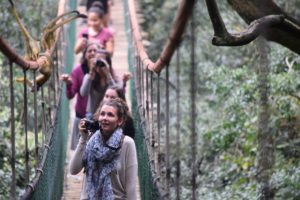
Faculty-Led Academic Trips provide a remarkable opportunity for an intensive learning experience with a group of Saint Michael’s College students and faculty. The 2026/2027 offerings reflect our commitment to international education and to experiential learning. We recognize that not all students can afford to study abroad for an entire semester, and these courses represent an exciting alternative. Trip destinations have been carefully selected to immerse students in their learning and to integrate their theoretical knowledge with the perspective of place. Most people will agree that this is the best way to learn and to retain knowledge.
If you have questions about any of these trips, please contact the faculty members who are indicated as the instructors for the course as soon as possible. Trip size will be limited, and a minimum number of students must register in order for the course to proceed. Academic Study Trips are not eligible for tuition remission. Half tuition is charged (per credit) during the winter or summer session. A limited number of need based scholarships are available for qualified applicants.
Winter-Session 2026-2027
ECUADOR and GALAPAGOS: FIELD TROPICAL ECOLOGY
BI250 (2 credits)
Prerequisite: BI249 (2 credits)
Date: December 29, 2026 – January 12, 2027
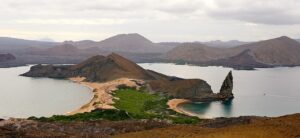
This 15-day trip to Ecuador over winter break builds on the foundational knowledge that students receive as a part of the fall course – BI 249: Tropical Ecology (2 cr.). In Ecuador, we will visit three different tropical ecosystems where students will document and compare the ecology at each site. After a day in Quito, we will travel to the Amazonian lowland rain forest and stay for four days at the Napo Cultural Center, an ecolodge owned and operated by the Kichwa Añangu indigenous community. A combination of forest hikes and riverboat excursions will introduce students to the most biodiverse place on the planet. We will also take part in cultural activities with the Kichwa people. Next we will spend two days in the Mindo cloud forest, a higher elevation, dense forest known for its incredible plant (e.g., > 4,000 orchid species) and animal (e.g., > 600 bird species) diversity. Finally, we will travel to the Galapagos Islands for five days of exploration. One of the world’s first UNESCO World Heritage sites, the Galapagos Islands offer a unique opportunity to see Nature up close, with a vast number of plant (~30%) and animal species (~80%) found nowhere else on earth.
The importance of these tropical ecosystems for wildlife conservation, evolutionary theory, and global climate regulation will be stressed. Students will also conduct short-term research projects at two of the three sites.
The combination of BI 249 and BI 250 can count as a Biology elective (population level requirement) and as the Digital Media & Communications study abroad experience.
Professor Paul Constantino, pconstantino@smcvt.edu
Professor Peter Hope
Professor Scott Lewins
Spring-Break Session 2027
MEXICO/ARIZONA: THE MIGRANT JOURNEY
EQ334
Prerequisite: EQJ333 (4 credits) and permission of instructor
Date: March 6 – 14, 2027
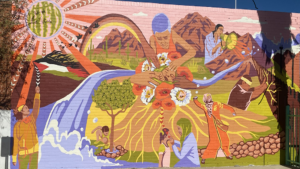
In this field trip to the southern border we travel to Arizona and to Nogales, Mexico to explore the migrant journey. With a focus upon the causes of immigration, the lived experiences of migrants, and the policies that define those experiences, we will learn from community partners committed to social justice. Humanitarian groups, migrant justice organizations, response teams, artist-activists, land owners, and indigenous leaders will inform our understanding. We will study surveillance and enforcement, the border wall, and serve at a shelter for migrants.
Educational workshops will prepare us for travel to Nogales, Mexico where we will meet with community members who share what it means to live in the shadow of the wall. We will travel west to Sasabe, Mexico, where the wall stretches for 20 miles from the O’odham nation and we will explore parts of the Sonoran desert with humanitarian groups that drop food and water to help migrants survive the brutal heat. We will meet with an artist-activist to plant a cross in his “Donde Mueren Los Suenos” project, marking sites in the desert where unidentified migrants have been found. We will also learn to cook El Salvadoran meals with a local women’s cooperative, and study the rich cultural heritage of many different migrant groups. Our days will be packed, and we will reserve time for readings and reflection in the evenings.
Professor Allison Cleary, acleary@smcvt.edu
Professor Omara Rivera-Vázquez, oriveravazqu@smcvt.edu
Summer-Session 2027
WALES: SUSTAINABILITY, PLACE and COMMUNITY
ES/PO244 (2 credits)
Prerequisites: ES/PO243 (Spring 2027; 2 credits)
Date: May 17 – 31, 2027
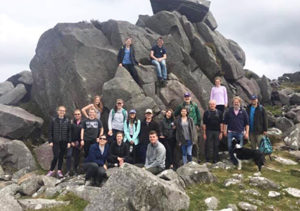
This two-week academic study trip combines an immersion in the gorgeous and diverse natural environment of Wales—its stunning rugged seacoast, surprisingly imposing mountain ranges, quaint villages and bustling modern urban capital—with a serious academic focus on how this small nation in the United Kingdom has integrated the principle of sustainability throughout its policies and institutions, economy and culture. Specifically, since the first Welsh National Assembly in 1999, Wales has been devoted to promoting comprehensive sustainable development, a duty that has been underscored by the passing of the Well-Being of Future Generations (Wales) Act in 2015. This law places a clear duty on public bodies in Wales—from councils, hospitals, businesses and schools—to consider the long-term interests of future generations while taking decisions on present-day concerns. The new Act also shapes how Wales is delivering on the United Nations’ 17 sustainable development goals and 169 targets. The course offers environmental, political and cultural field studies, on-site guest lectures, and exchange of research and artistic projects with University of Wales-Trinity Saint David students and faculty. The Carmarthen campus of the university will serve as the program base and is a short walk from downtown Carmarthen, the oldest city in Wales. This location provides easy access to the Welsh Assembly in Cardiff, the College of Art in Swansea, economic, historical and cultural hubs, the picturesque seaside town of Tenby, and day hikes through the beautiful and rugged Brecon Beacons, and along the stunning Welsh Coastal Path.
Professor Jeffrey Ayres, jayres@smcvt.edu
Professor Brian Collier, bcollier@smcvt.edu
GALWAY, IRELAND: GREEN IRELAND – CONSERVATION IN THE IRISH CONTEXT
BI232 (2 credits)
Prerequisites: BI231 and one of the following – BI 151, BI 152, ES 105, ES 106, ES 107 or ED 325 (2 credits)
Date: May 17 – 29, 2027
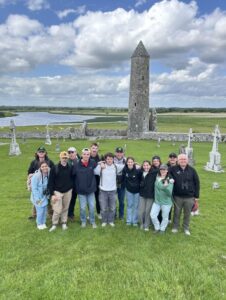
SPRING COURSE: Ireland faces unique conservation challenges: population density is twice that of the US, 90% of land is privately owned Vs 60% in the US, and the native flora and fauna lack diversity due to post-glacial isolation. Just 11% of the land area is forested and mostly supporting non-native Sitka spruce. Ireland’s depauperate natural communities poorly resist invasion by exotic species. This course will explore conservation under Ireland’s unique geologic, biotic, and cultural backdrop.
SUMMER STUDY TRIP: Conservation presents unique problems and opportunities in Ireland. The ocean serves as a barrier that keeps some invasive species at bay while simultaneously being the cause of Ireland’s depauperate fauna and flora. By visiting Ireland, students will have the opportunity to interface with and learn directly from conservation organizations on the ground. This course will include service projects with both urban and very rural non-governmental organizations. This course will build directly from BI 231.
Professor Declan McCabe, dmccabe@smcvt.edu
Professor Paul Constantino, pconstantino@smcvt.edu
SOUTH AFRICA: THE ART OF RESISTANCE
EQJ323 (2 credits)
Prerequisites: EQJ322 (2 credits)
Date: June 3 – 20, 2027

On this 2-week Academic Study Trip to South Africa, students will spend time in Cape Town and Johannesburg learning about the revolutionary fight against Apartheid and its soundtrack to change, as well as leaders like Nelson Mandela, Archbishop Desmond Tutu, and other important figures – both well-known and unsung. We will consider the potential that we all have for the kinds of creativity and creative energy necessary for positive social change. Our approach will combine exploration of power, oppression, resistance, and liberation with application of the expressive arts and their essential role in effecting change in South Africa. Our foundational questions are: How do social systems of hierarchy, oppression, and domination exist, and what makes people go along with them? How is media propaganda used to control our thinking and influence our actions? How do we free our minds to become critical and creative thinkers, able to seek transformation of ourselves and society toward liberation, equity, and justice? What is the relationship between this kind of inner, personal freedom and outward-facing, creative self-expression that has the power to transform our societies? How can we hear South African history through the strains of its freedom songs, choral traditions, and popular artists whose music frequently spoke to the injustices of Apartheid? How can art galvanize, empower, reimagine, resist, and tell narratives counter to those coming from spaces of power and control? How might the musical and visual symbols of art invite resistance and change in the face of oppression? We will also continue to compare and contrast movements for liberation and equity – including the artistic sides of said movements – in South Africa and the United States.
Professor Katie Kirby, kkirby@smcvt.edu
Professor Bill Ellis, wellis@smcvt.edu
Freeman Foundation International Internship
Saint Michael’s College is pleased to announce the annual Global Citizenship International Internship Program, supported by a grant from the Freeman Foundation. learn more…
Approved Programs
Researching programs and destinations is the first step toward your international adventure! Start with an open mind, stretch your imaginations, and explore the possibilities. Tap the purple boxes below and you’ll find SMC’s pre-approved programs. For more information on a program’s course offerings, housing options, in-country support services, and country highlights, tap on Program Partners (see tab on left). Now explore the world, one click at a time!
Program Partners
Academic Study Trips
Faculty-Led Academic Trips provide a remarkable opportunity for an intensive learning experience with a group of Saint Michael’s College students and faculty. The 2026/2027 offerings reflect our commitment to international education and to experiential learning. We recognize that not all students can afford to study abroad for an entire semester, and these courses represent an exciting alternative. Trip destinations have been carefully selected to immerse students in their learning and to integrate their theoretical knowledge with the perspective of place. Most people will agree that this is the best way to learn and to retain knowledge.
If you have questions about any of these trips, please contact the faculty members who are indicated as the instructors for the course as soon as possible. Trip size will be limited, and a minimum number of students must register in order for the course to proceed. Academic Study Trips are not eligible for tuition remission. Half tuition is charged (per credit) during the winter or summer session. A limited number of need based scholarships are available for qualified applicants.
Winter-Session 2026-2027
ECUADOR and GALAPAGOS: FIELD TROPICAL ECOLOGY
BI250 (2 credits)
Prerequisite: BI249 (2 credits)
Date: December 29, 2026 – January 12, 2027
This 15-day trip to Ecuador over winter break builds on the foundational knowledge that students receive as a part of the fall course – BI 249: Tropical Ecology (2 cr.). In Ecuador, we will visit three different tropical ecosystems where students will document and compare the ecology at each site. After a day in Quito, we will travel to the Amazonian lowland rain forest and stay for four days at the Napo Cultural Center, an ecolodge owned and operated by the Kichwa Añangu indigenous community. A combination of forest hikes and riverboat excursions will introduce students to the most biodiverse place on the planet. We will also take part in cultural activities with the Kichwa people. Next we will spend two days in the Mindo cloud forest, a higher elevation, dense forest known for its incredible plant (e.g., > 4,000 orchid species) and animal (e.g., > 600 bird species) diversity. Finally, we will travel to the Galapagos Islands for five days of exploration. One of the world’s first UNESCO World Heritage sites, the Galapagos Islands offer a unique opportunity to see Nature up close, with a vast number of plant (~30%) and animal species (~80%) found nowhere else on earth.
The importance of these tropical ecosystems for wildlife conservation, evolutionary theory, and global climate regulation will be stressed. Students will also conduct short-term research projects at two of the three sites.
The combination of BI 249 and BI 250 can count as a Biology elective (population level requirement) and as the Digital Media & Communications study abroad experience.
Professor Paul Constantino, pconstantino@smcvt.edu
Professor Peter Hope
Professor Scott Lewins
Spring-Break Session 2027
MEXICO/ARIZONA: THE MIGRANT JOURNEY
EQ334
Prerequisite: EQJ333 (4 credits) and permission of instructor
Date: March 6 – 14, 2027
In this field trip to the southern border we travel to Arizona and to Nogales, Mexico to explore the migrant journey. With a focus upon the causes of immigration, the lived experiences of migrants, and the policies that define those experiences, we will learn from community partners committed to social justice. Humanitarian groups, migrant justice organizations, response teams, artist-activists, land owners, and indigenous leaders will inform our understanding. We will study surveillance and enforcement, the border wall, and serve at a shelter for migrants.
Educational workshops will prepare us for travel to Nogales, Mexico where we will meet with community members who share what it means to live in the shadow of the wall. We will travel west to Sasabe, Mexico, where the wall stretches for 20 miles from the O’odham nation and we will explore parts of the Sonoran desert with humanitarian groups that drop food and water to help migrants survive the brutal heat. We will meet with an artist-activist to plant a cross in his “Donde Mueren Los Suenos” project, marking sites in the desert where unidentified migrants have been found. We will also learn to cook El Salvadoran meals with a local women’s cooperative, and study the rich cultural heritage of many different migrant groups. Our days will be packed, and we will reserve time for readings and reflection in the evenings.
Professor Allison Cleary, acleary@smcvt.edu
Professor Omara Rivera-Vázquez, oriveravazqu@smcvt.edu
Summer-Session 2027
WALES: SUSTAINABILITY, PLACE and COMMUNITY
ES/PO244 (2 credits)
Prerequisites: ES/PO243 (Spring 2027; 2 credits)
Date: May 17 – 31, 2027
This two-week academic study trip combines an immersion in the gorgeous and diverse natural environment of Wales—its stunning rugged seacoast, surprisingly imposing mountain ranges, quaint villages and bustling modern urban capital—with a serious academic focus on how this small nation in the United Kingdom has integrated the principle of sustainability throughout its policies and institutions, economy and culture. Specifically, since the first Welsh National Assembly in 1999, Wales has been devoted to promoting comprehensive sustainable development, a duty that has been underscored by the passing of the Well-Being of Future Generations (Wales) Act in 2015. This law places a clear duty on public bodies in Wales—from councils, hospitals, businesses and schools—to consider the long-term interests of future generations while taking decisions on present-day concerns. The new Act also shapes how Wales is delivering on the United Nations’ 17 sustainable development goals and 169 targets. The course offers environmental, political and cultural field studies, on-site guest lectures, and exchange of research and artistic projects with University of Wales-Trinity Saint David students and faculty. The Carmarthen campus of the university will serve as the program base and is a short walk from downtown Carmarthen, the oldest city in Wales. This location provides easy access to the Welsh Assembly in Cardiff, the College of Art in Swansea, economic, historical and cultural hubs, the picturesque seaside town of Tenby, and day hikes through the beautiful and rugged Brecon Beacons, and along the stunning Welsh Coastal Path.
Professor Jeffrey Ayres, jayres@smcvt.edu
Professor Brian Collier, bcollier@smcvt.edu
GALWAY, IRELAND: GREEN IRELAND – CONSERVATION IN THE IRISH CONTEXT
BI232 (2 credits)
Prerequisites: BI231 and one of the following – BI 151, BI 152, ES 105, ES 106, ES 107 or ED 325 (2 credits)
Date: May 17 – 29, 2027
SPRING COURSE: Ireland faces unique conservation challenges: population density is twice that of the US, 90% of land is privately owned Vs 60% in the US, and the native flora and fauna lack diversity due to post-glacial isolation. Just 11% of the land area is forested and mostly supporting non-native Sitka spruce. Ireland’s depauperate natural communities poorly resist invasion by exotic species. This course will explore conservation under Ireland’s unique geologic, biotic, and cultural backdrop.
SUMMER STUDY TRIP: Conservation presents unique problems and opportunities in Ireland. The ocean serves as a barrier that keeps some invasive species at bay while simultaneously being the cause of Ireland’s depauperate fauna and flora. By visiting Ireland, students will have the opportunity to interface with and learn directly from conservation organizations on the ground. This course will include service projects with both urban and very rural non-governmental organizations. This course will build directly from BI 231.
Professor Declan McCabe, dmccabe@smcvt.edu
Professor Paul Constantino, pconstantino@smcvt.edu
SOUTH AFRICA: THE ART OF RESISTANCE
EQJ323 (2 credits)
Prerequisites: EQJ322 (2 credits)
Date: June 3 – 20, 2027
On this 2-week Academic Study Trip to South Africa, students will spend time in Cape Town and Johannesburg learning about the revolutionary fight against Apartheid and its soundtrack to change, as well as leaders like Nelson Mandela, Archbishop Desmond Tutu, and other important figures – both well-known and unsung. We will consider the potential that we all have for the kinds of creativity and creative energy necessary for positive social change. Our approach will combine exploration of power, oppression, resistance, and liberation with application of the expressive arts and their essential role in effecting change in South Africa. Our foundational questions are: How do social systems of hierarchy, oppression, and domination exist, and what makes people go along with them? How is media propaganda used to control our thinking and influence our actions? How do we free our minds to become critical and creative thinkers, able to seek transformation of ourselves and society toward liberation, equity, and justice? What is the relationship between this kind of inner, personal freedom and outward-facing, creative self-expression that has the power to transform our societies? How can we hear South African history through the strains of its freedom songs, choral traditions, and popular artists whose music frequently spoke to the injustices of Apartheid? How can art galvanize, empower, reimagine, resist, and tell narratives counter to those coming from spaces of power and control? How might the musical and visual symbols of art invite resistance and change in the face of oppression? We will also continue to compare and contrast movements for liberation and equity – including the artistic sides of said movements – in South Africa and the United States.
Professor Katie Kirby, kkirby@smcvt.edu
Professor Bill Ellis, wellis@smcvt.edu
Freeman Foundation International Internship
Saint Michael’s College is pleased to announce the annual Global Citizenship International Internship Program, supported by a grant from the Freeman Foundation. learn more…